
A hot afternoon in East Texas can turn a small window problem into a whole-house comfort problem. The living room feels drafty near the glass, one sash sticks when you try to open it, and a hazy patch between the panes refuses to disappear. Meanwhile, the cooling system runs longer and the summer bill keeps climbing.
That situation raises a practical question: when to replace windows, rather than when to clean them or apply another bead of caulk. Window replacement affects comfort, air leakage, moisture control, storm readiness, security, appearance, and the long-term value of the materials you already own. A new window can help, but replacing a repairable historic or well-built unit too soon can also waste money and usable building materials.
The right decision starts with understanding how a window works. From there, you can identify genuine failure, separate repairable defects from systemic problems, inspect every room, and judge timing through a Texas climate and lifecycle lens.
Table of Contents
- Introduction Why Timing Your Window Replacement Matters
- How Windows Protect Comfort and Efficiency
- Clear Signs It Is Time to Replace Your Windows
- Repair or Replace How to Make the Right Call
- Your Room by Room Window Assessment Checklist
- Timing Cost and Climate Factors That Influence Your Decision
- Next Steps for Quotes Warranties and Installation
Introduction Why Timing Your Window Replacement Matters
A homeowner in Tyler might first notice the problem in the room that gets afternoon sun. The glass feels hot, the sofa nearest the window is uncomfortable, and the air conditioner seems unable to catch up. Another homeowner in Longview may notice a different pattern, a rattle during a storm, water staining below the sill, or a bedroom window that won't lock securely.
Those symptoms don't all mean the same thing. A loose handle can be a hardware repair. Failed glazing seals across several units may indicate that replacement deserves serious consideration. A rotted wooden sill requires a closer inspection because replacing only the visible trim may leave hidden moisture damage behind.
Practical rule: Treat a window as a part of the home's weather barrier, not as an isolated piece of décor.
Texas conditions make timing especially important. Strong sun increases heat gain through exposed glass, while wind-driven rain can test gaps around frames and trim. Storm exposure also makes reliable operation and locking more than a convenience. A window that sticks during normal weather may become a difficult escape or ventilation opening when you need it most.
Start with the cause, not the symptom
Energy costs alone don't prove that windows have failed. Cooling performance also depends on insulation, ductwork, shading, air sealing, and equipment condition. However, rising bills become more meaningful when they appear alongside persistent drafts, fogging between panes, difficult operation, or visible water damage.
This guide uses a simple sequence. First, you'll learn how glass, seals, frames, and weatherstripping work together. Then you'll examine observable failure signs, compare repair with replacement, complete a room-by-room assessment, and weigh climate exposure against lifecycle economics. You'll finish with a practical process for requesting quotes, checking warranties, and planning installation.
The goal isn't to push every homeowner toward new windows. It's to help you identify the point at which continued patching no longer addresses the underlying problem.
How Windows Protect Comfort and Efficiency
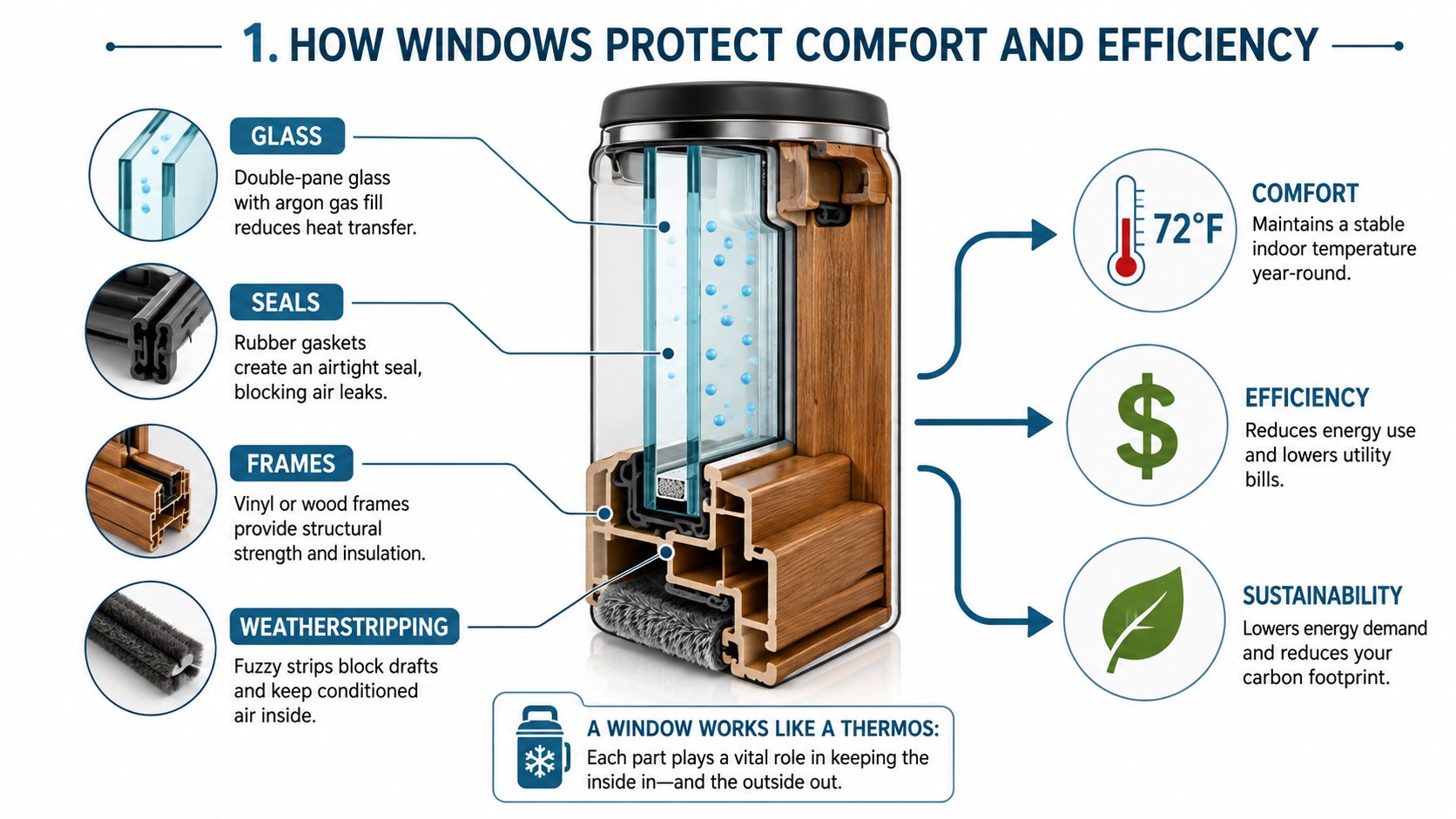
Think of the window assembly as a cooler lid. A cooler keeps its contents protected because the lid, gasket, shell, and closure work together. If the gasket tears or the lid stops sealing, the cooler loses performance even if the shell still looks clean.
A home window works in much the same way. The glass controls heat transfer and sunlight, the seals keep the insulating cavity closed, the frame supports the unit, and weatherstripping limits air movement where the sash meets the frame. If one component fails, the others may still look normal while the assembly performs poorly.
Four parts work as one system
An insulated glass unit, or IGU, uses multiple panes separated by a sealed cavity. That cavity may contain insulating gas, and the sealed space reduces heat transfer compared with a basic single layer of glass. Low-emissivity, or low-E, coatings can further limit unwanted radiant heat, a useful feature for rooms exposed to strong Texas sun. For a plain-language overview of energy efficiency with double glazing, look for explanations that distinguish glass layers, cavity space, and coatings rather than treating “double pane” as a complete specification.
The seal around an IGU has a particularly important job. It keeps moisture out and the insulating cavity intact. When that seal fails, the window can develop haze or moisture between panes, and wiping the inside and outside surfaces won't remove it because the problem is inside the sealed assembly.
Frames create the structural boundary. Vinyl can resist common moisture problems, wood can be repaired when damage is localized, and other materials offer different balances of strength, appearance, and maintenance. None of those choices eliminates the need for correct installation. A high-performing unit can still leak air or water if the opening isn't prepared and sealed properly.
Read performance labels carefully
Homeowners often compare U-factor and R-value as if they're interchangeable. They describe related thermal behavior from different directions, so learning U-factor versus R-value can make product discussions less confusing. Ask a contractor to explain the complete assembly, including glass, frame, spacer, hardware, and installation details.
In a hot climate, the most comfortable window isn't always the one with the most glass or the lowest quoted price. Orientation, exterior shade, room use, and exposure to wind-driven rain all matter. A shaded north-facing opening may behave differently from a west-facing bedroom window that receives late-day sun.
The useful question is simple: which part of the window is limiting performance? If the issue is a worn strip or adjustable hardware, repair may restore the seal. If the IGU, frame, and opening have all deteriorated, a new assembly may be the more sensible path.
Clear Signs It Is Time to Replace Your Windows
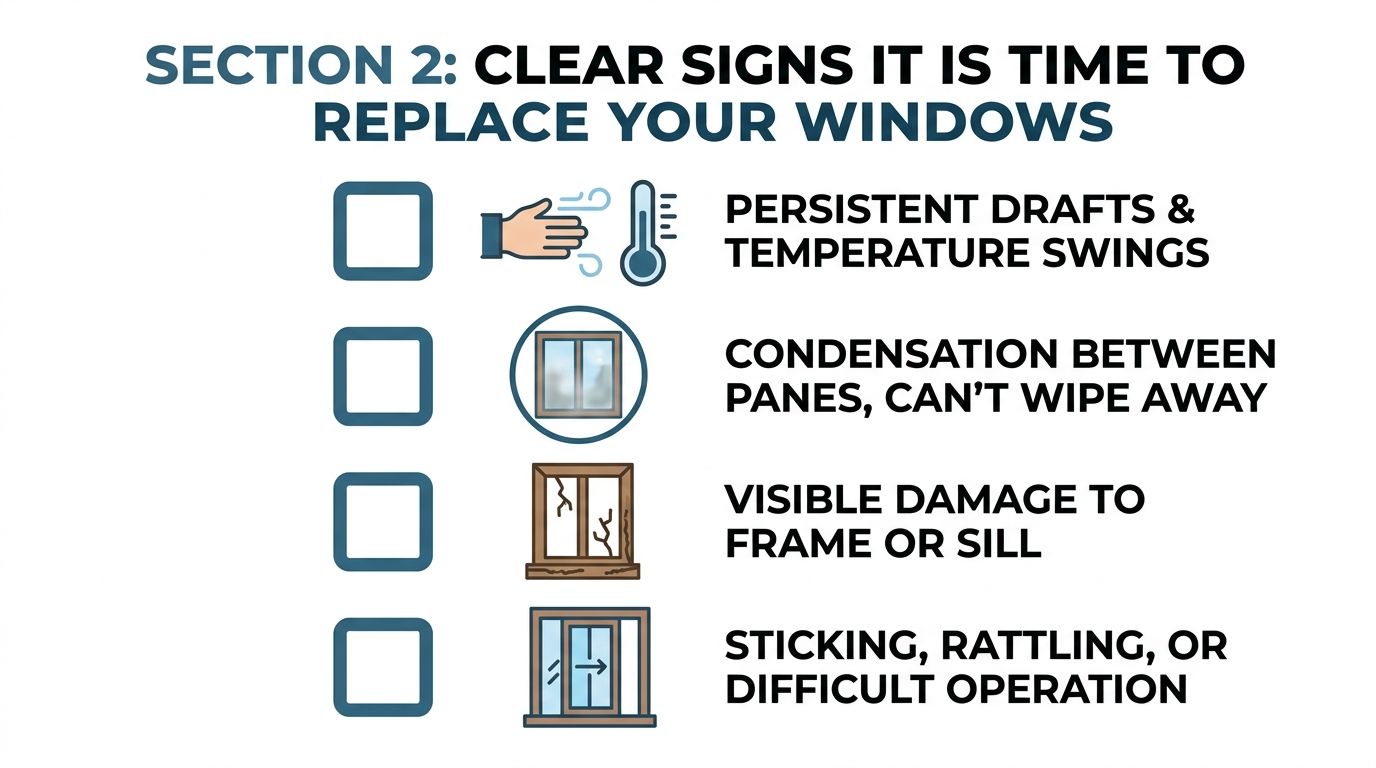
Window failure usually announces itself through a group of clues rather than one isolated symptom. Start with what you can see, feel, hear, and operate. Then connect each observation to a likely cause.
Feel for air and temperature changes
Stand beside a closed window on a windy day and move your hand slowly around the sash, meeting rail, and frame. A strip of tissue can make moving air easier to notice, but don't use an open flame. Persistent drafts may come from worn weatherstripping, gaps in the frame, failed caulk, or installation problems.
A single draft doesn't automatically justify replacement. If new weatherstripping or careful re-caulking restores the seal, repair may be enough. Replacement becomes more compelling when drafts continue after maintenance, several windows show the same defect, or the room remains noticeably hotter or colder than adjacent spaces.
Inspect for moisture between panes
Fog, haze, or droplets between panes that can't be wiped off are a technically defensible replacement trigger. The window seal failure guide explains the cause-and-effect chain: seal degradation allows moist air into the cavity and insulating gas to escape, permanently reducing the unit's thermal performance.
Check the inside and outside surfaces first. Clean both sides, look at the glass from different angles, and confirm that the haze remains trapped inside. Persistent between-pane moisture paired with drafts or higher cooling demand points to a failed IGU, not a cleaning problem. A specialist can sometimes replace the sealed glass unit without replacing the entire frame, depending on its condition and compatibility.
For a deeper explanation of possible causes and checks, see this guide to condensation inside home windows.
Test movement, locking, and frame condition
Open and close each operating window slowly. Binding, rattling, a sash that drops, or a handle that won't engage may indicate worn balances, damaged tracks, shifted framing, or a failed lock. Hardware can often be replaced, but operation problems become more serious when the frame is warped or the opening has moved.
Look closely at the sill and lower corners. Soft wood, peeling finishes, swollen joints, cracked vinyl, bent metal, or dark staining can signal water intrusion. Press gently on painted wood with a small screwdriver only where you can repair the finish afterward. Don't create new damage to test old damage.
Look beyond the glass
Water marks on interior drywall or trim deserve prompt attention, even if the window still opens. Wind-driven rain can enter through failed perimeter seals, damaged flashing, or deteriorated exterior trim. A professional should trace the water path rather than assume that replacing the visible caulk will solve it.
Outside noise, rattling, fading, and uncomfortable solar heat can also influence the decision. They matter most when they occur alongside air leakage, failed seals, or damaged frames. The stronger the cluster of symptoms, the less useful a cosmetic fix becomes.
Repair or Replace How to Make the Right Call
Repair and replacement solve different kinds of problems. Repair preserves a sound assembly by restoring one weak component. Replacement removes a unit whose glass, frame, seals, or installation condition no longer support reliable performance.
Older windows deserve a lifecycle discussion before removal. An independent analysis cited an energy consultant's estimate of only about $40 per year in savings after replacement windows were installed in Upstate New York, while the same analysis notes that historic wood windows can last 200+ years and replacement windows often last 10–20 years. Those figures come from a different climate and project, so they aren't a Texas payback promise. They do show why energy savings alone shouldn't decide every project, especially when a repair can preserve a durable frame and avoid discarding usable material. Review the lifecycle analysis here.
Compare the condition, not just the age
| Condition | Best Option | Why It Matters |
|---|---|---|
| Worn weatherstripping, loose handle, or isolated track problem | Repair | A targeted fix may restore operation and limit air leakage without removing a sound frame. |
| One failed IGU with a solid, square frame | Glass-unit repair or selective replacement | The sealed glass may be the failed component, while the surrounding frame remains serviceable. |
| Rot limited to replaceable exterior trim or sill material | Repair after moisture tracing | Removing the source and rebuilding the damaged area can preserve the window. |
| Widespread fogging across units | Replacement planning | Multiple failed IGUs may indicate aging components and make piecemeal work less attractive. |
| Warped, cracked, or structurally weak frame | Replacement | New weatherstripping won't correct a frame that no longer holds the sash securely. |
| Repeated leaks after earlier repairs | Professional diagnosis, often replacement | Continuing to seal the surface can conceal an installation or water-management failure. |
| Historic window with sound wood and important character | Restoration evaluation | Preservation may offer better lifecycle value than removing a repairable assembly. |
Use Texas exposure as a tie-breaker
A window facing intense afternoon sun may justify a higher-performance replacement sooner than a shaded opening with minor defects. Likewise, a storm-exposed opening with unreliable locks deserves attention before a low-use window with a cosmetic flaw.
A useful comparison is the familiar repair-versus-replace decision for an air conditioner. The same reasoning applies, but the window's condition, repair history, and material life must remain central. Don't replace a sound window merely because a newer model exists, and don't keep paying for repeated temporary fixes when the frame and IGU have both failed.
Your Room by Room Window Assessment Checklist
A hands-on inspection can make a contractor's quote more accurate and help you prioritize work. Gather a flashlight, tape measure, painter's tape, paper or a notes app, a phone camera, and a tissue strip for draft testing. Avoid candles, lighters, or any open flame around curtains and trim.
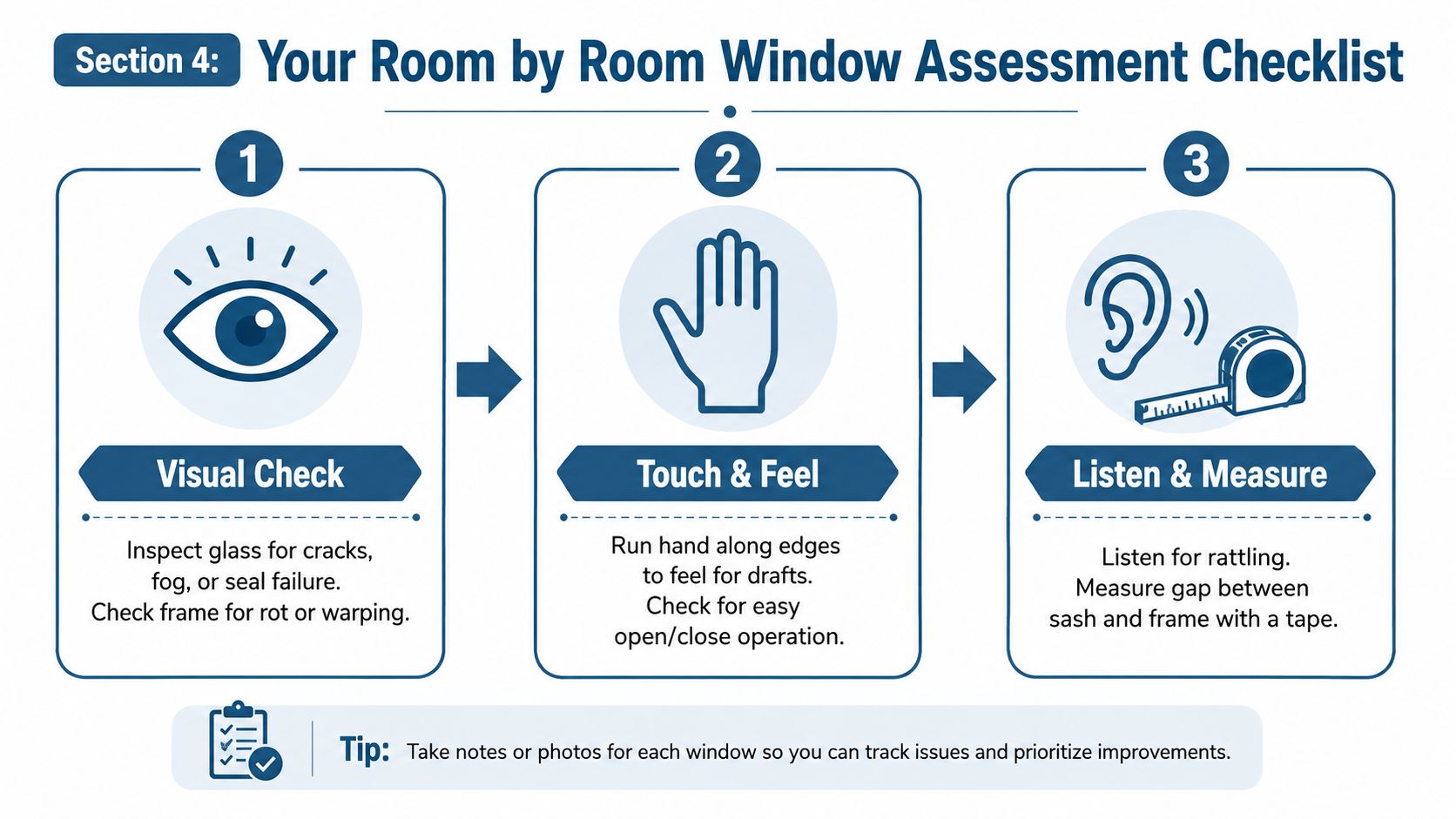
Follow the same sequence in every room
1. Label the opening. Start with the room name and window position, such as “west bedroom, left window.” Put a small piece of painter's tape beside the opening so photos and notes stay matched.
2. Complete the visual check. Look for cracked glass, haze between panes, damaged gaskets, peeling exterior finish, rot, warped sash members, and gaps at the trim. Use the flashlight along the sill and corners, where staining can hide in shadow.
3. Run a touch and draft test. Place your hand along the meeting rail, side jambs, and lower sill. Compare windows in the same room. If one feels substantially different, mark it for closer review instead of assuming every unit needs replacement.
4. Test operation. Release the window, open it through its normal travel, and close it fully. Note binding, rattling, a sash that won't stay in position, or a lock that doesn't align. Never force a stuck unit, since force can turn a repair into broken glass or damaged hardware.
5. Check moisture. Wipe the interior and exterior glass, then inspect again. Mark moisture that remains between panes separately from surface condensation, because those conditions point to different causes.
Record evidence that helps with quotes
Photograph the full opening, then take close-ups of the defect and any related trim or drywall staining. Measure the visible width and height of the opening, but tell the installer that these are preliminary dimensions. Professional measurements should confirm the actual order size, reveal uneven openings, and identify whether a pocket, insert, or full-frame approach is appropriate.
Use a simple priority system:
- Urgent: Active leaks, unsafe glass, failed locks, severe rot, or a window that can't close securely.
- High priority: Persistent between-pane fogging, continuing drafts, major solar discomfort, or repeated repair history.
- Plan ahead: Cosmetic fading, mild noise, or a desirable performance upgrade with no active failure.
Keep the notes for warranty conversations and compare quotes using the same window locations. A detailed record also helps you decide whether replacement should happen all at once or in phases.
Timing Cost and Climate Factors That Influence Your Decision
Window life depends on material, use, exposure, maintenance, and installation quality. Current guidance places common window life across a broad 15 to 50 year range, and the replacement-signs guidance from Pella lists drafts, fogging, leaks, and operating problems among the signs that deserve attention. Age is a planning signal, not an automatic order to replace every unit.
Build a climate-aware decision
In Texas, timing should answer four questions:
- Will the window protect the room during the next hot season? West-facing glass with failed seals or poor air control can make cooling discomfort more obvious.
- Can the assembly handle weather exposure? Inspect locks, frame joints, exterior trim, and perimeter sealing before storm conditions expose a weakness.
- Does the project improve more than appearance? Consider air control, solar comfort, moisture resistance, ventilation, and security together.
- Will waiting create additional work? A small repair may become a framing, drywall, or finish problem if water continues entering the opening.
Spring and fall can be convenient installation seasons because moderate weather may make room-by-room work more comfortable. They aren't the only viable times, though. If a window is leaking or won't lock, waiting for a preferred season can prolong damage and discomfort.
Judge the upgrade, not just the replacement
New insulated glass assemblies, low-E options, improved weatherstripping, tilt-turn operation, and multi-point locking can address needs beyond a failed pane. Tilt-turn hardware can provide controlled ventilation and secure closure, while stronger locking arrangements may matter for ground-floor openings.
The decision should still be specific to the room. A replacement may make sense in a sunny living room where heat and drafts are persistent, while restoration may suit a shaded room with a sound historic frame. For broader context on value-added home improvements in Houston, compare window work with other projects rather than assuming every upgrade produces the same return.
Modern replacement windows may improve comfort and reduce the workload placed on cooling equipment, but don't assign a guaranteed payback without examining the home's orientation, shading, existing air leakage, and installation quality. A climate-aware ROI lens asks what problem the window solves, how long the solution should remain useful, and what damage or energy waste waiting may allow.
For a more focused discussion of the financial side, use this guide to window replacement return on investment as one input, not as a promise of a fixed result.
Next Steps for Quotes Warranties and Installation
Start by sending each installer the same information: room labels, photos, visible measurements, operating style, and notes about drafts, fogging, leaks, locks, or solar exposure. Ask whether the recommendation is for IGU repair, insert replacement, pocket replacement, or full-frame replacement, and ask what the crew expects to find after trim removal.
A useful quote should identify the product line, frame material, glass configuration, operating hardware, exterior finish, installation scope, disposal, interior or exterior trim work, and warranty terms. Ask specifically how the proposed assembly is suited to strong heat, sun exposure, wind-driven rain, and the conditions around your home. Confirm who handles measurement, ordering, installation, service calls, and warranty claims.
Professional measurement matters because existing openings aren't always square, and a visible opening measurement isn't the same as the required manufacturing size. The installer should also check surrounding framing and explain any condition that could change the scope before the order is finalized. Custom products may require planning, so address lead times before scheduling around a move, remodel, or weather concern.
Breaking Glass Co. supplies and installs residential and commercial windows and doors across Texas, offers factory-direct products engineered for Texas and Southwest climates, provides statewide installation, supports warranty questions, and ships products nationwide. Homeowners can use its quote process to compare replacement options with their documented room-by-room findings.
Don't wait for a dramatic failure if your notes already show persistent seal problems, active leaks, or unreliable operation. Request comparable quotes, verify the installation and warranty details in writing, and choose the scope that solves the underlying condition rather than masking it.
If your East Texas home has fogged IGUs, drafts, sticking sashes, leaks, or storm-readiness concerns, visit Breaking Glass Co. to request a free same-day quote. Share your photos and assessment notes so the team can help you evaluate window replacement, installation, and climate-appropriate product options.