
You wake up, walk past the living-room windows, and find beads of water running down the glass. The bathroom was steamy after a shower, the house stayed closed up overnight, and the temperature dropped outside. It's easy to blame the windows, but condensation inside home windows is usually a diagnostic signal, not a diagnosis by itself.
The useful question is not just how to remove the water. It's which of three variables is out of balance: indoor humidity, outdoor temperature, or the temperature of the glass surface. Once you identify the weak link, you can choose between a quick moisture-control fix, a ventilation adjustment, a glass-unit repair, or full replacement.
Table of Contents
- Why Condensation Forms on Home Windows
- Interior Condensation Versus Condensation Between Panes
- Reading Your Window for the Real Cause
- Immediate Fixes That Reduce Window Condensation
- Controlling Moisture Sources Room by Room
- When the Fix Is the Glass Not the Humidity
- When Full Window Replacement Is the Smart Move
Why Condensation Forms on Home Windows
Start with a familiar morning. The indoor air is warm after a shower, cooking, and normal household activity. Overnight, cold outdoor air has cooled the window glass, especially if the window is single glazed. When that warm, moist air reaches the cold pane, water appears on the surface.
The process is similar to a cold drink sweating on a humid summer day. The drink itself isn't leaking. The surrounding air contains moisture, and when that air touches a surface cold enough, the moisture changes from vapor into liquid water. On a window, that temperature threshold is the dew point.
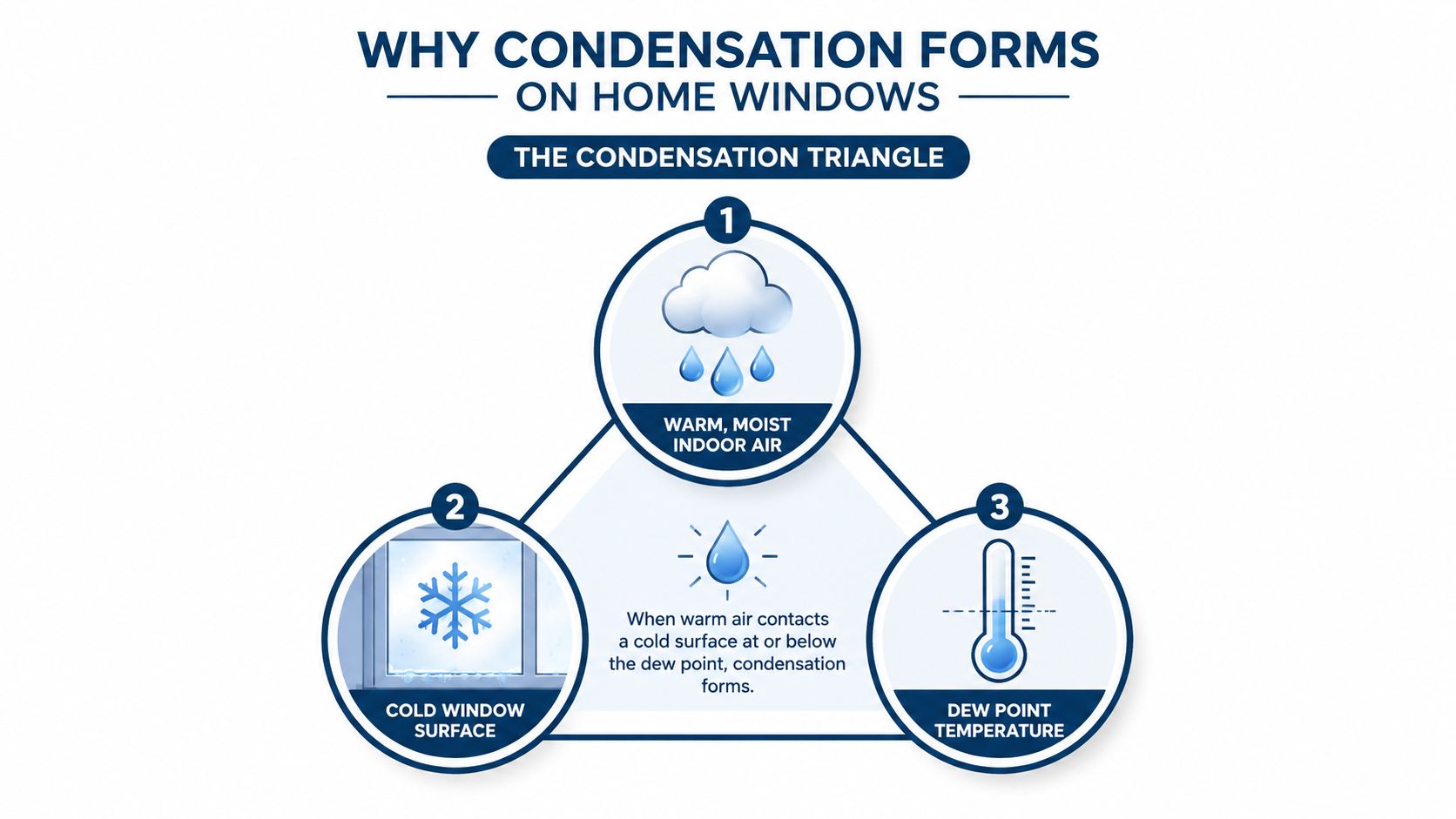
The three variables to check
Indoor relative humidity tells you how much moisture the air is carrying. Showers, boiling food, drying clothes, combustion appliances, and humidifiers can all raise it.
Outdoor temperature controls how aggressively the window loses heat. A pane that stays dry during a mild night may collect water during a cold snap, even if your indoor routine hasn't changed.
Glass surface temperature determines whether the pane falls below the dew point. Glazing type matters because additional panes and insulating spaces keep the interior surface warmer.
The historical guidance from the National Research Council of Canada shows the interaction clearly. At an indoor temperature of 70°F, a single-glazed window exposed to 20°F outdoor air can tolerate only about 24% indoor relative humidity before condensation begins. A double-glazed window can tolerate about 50%, while a triple-glazed window can tolerate about 66% under the same conditions. At 0°F outdoors, the approximate limits fall to 18% for single glazing, 33% for double glazing, and 46% for triple glazing (National Research Council of Canada guidance archived by MIT).
Practical rule: If only one old window sweats, suspect its glass temperature or airflow first. If many windows sweat after showers, cooking, or laundry, suspect indoor moisture.
Look at the pattern before changing anything. Water on one exposed, cold pane points toward glazing, drafts, shading, or blocked airflow. Water across several rooms points toward humidity or ventilation. The window is showing you where warm moisture meets a surface cold enough to condense it.
Interior Condensation Versus Condensation Between Panes
A foggy window can point to two very different repairs. Touch the glass with a clean, dry finger while the fog is visible. If your finger reaches the moisture, condensation is on the room side. If both accessible surfaces feel dry but a milky haze remains inside the assembly, moisture is trapped between the panes.

What surface moisture looks like
Interior condensation appears as droplets, streaks, or a wet film. Wiping removes it temporarily, but it can return quickly when indoor humidity remains high and the glass surface stays below the dew point. Opening blinds, improving airflow, reducing moisture, or warming the pane may change the pattern.
Single-pane glass reaches this point sooner because its indoor surface cools more readily. As shown in the earlier NRCan data, double glazing provides substantially more tolerance than single glazing under the same cold-weather conditions. That advantage has limits. An insulated unit can still collect water when indoor moisture is high, the weather turns sharply colder, or airflow across the pane is blocked.
Surface condensation is usually a moisture and temperature problem, not a failed window seal. The first lever to pull depends on what the glass is doing. If wiping clears the view and the fog returns with cooking, showers, or laundry, address humidity and ventilation before ordering replacement glass. If one pane stays wet while similar windows remain dry, compare its glass temperature, exposure, and airflow.
What failed seals look like
Between-pane fog appears as a gray, milky, or cloudy area that cannot be cleaned from either side. It may shift slightly with sunlight or temperature, and droplets can form inside the sealed cavity. Wiping the room-side and exterior surfaces will not remove it.
An insulated glass unit depends on a sealed space and moisture-absorbing material in its spacer system. Once the seal fails, outside moisture enters the cavity and the unit loses some insulating performance. Cleaning cannot restore that seal. Depending on the frame and sash condition, a specialist may replace only the insulated glass unit, replace the sash, or recommend the entire window.
The timing helps confirm the diagnosis. Droplets after a cold night or humid morning usually point to indoor conditions. Haze that remains despite changes in room humidity is more suspicious for seal failure. Confirm which side of the glass is fogging before paying for a full window replacement.
Reading Your Window for the Real Cause
Before buying film, ordering glass, or booking a service call, spend a few minutes reading the window. The pattern often tells you more than the amount of water.
Start with the room
Check whether blinds, curtains, furniture, or deep window seats block warm air from reaching the pane. Closed coverings trap a layer of still air beside the glass, while a sofa or cabinet can prevent room air from circulating across the lower sash.
Look at nearby exhaust points. A bathroom door left open after a shower can move humid air into colder rooms. A kitchen range hood that only recirculates air may remove odors without removing the moisture created by cooking.
Compare windows and conditions
Ask these questions:
- Location: Does the problem affect a north-facing or shaded window more than a sunny, sheltered one?
- Timing: Does fog appear only after a cold night, or every morning regardless of weather?
- Coverage: Is the whole pane wet, or only the lower edge and corners?
- Operation: Does the sash close evenly, or does it bind and leave gaps?
- Frame: Do you see soft wood, swelling, cracks, staining, or deteriorated sealant?
- Weatherstripping: Does the gasket compress when the window closes, or does it look flattened and loose?
A window that fogs only during a cold snap may be functioning normally under unusually demanding conditions, especially if it has older glazing. A window that stays cloudy between panes despite dry indoor air has a different failure path. If the frame is sound and the issue is confined to the sealed glass, a glass-unit replacement may be enough. If the sash no longer closes squarely or the frame shows decay, replacing only the glass can leave the main problem in place.
A quick finger test, combined with timing and location, usually tells you whether you're dealing with room moisture, restricted airflow, or a failed insulated unit.
Immediate Fixes That Reduce Window Condensation
A foggy pane on a cold morning gives you three variables to check: indoor relative humidity, glass surface temperature, and glazing type. Start with a small digital hygrometer in the affected room, positioned away from supply registers, exterior walls, kitchen steam, and sunlight. Keeping humidity around 30–50% indoor relative humidity can reduce condensation, consistent with window condensation fundamentals and moisture-control guidance.
Air can feel comfortable while still carrying enough moisture to wet cold glass, so use the reading rather than guesswork.
Make these changes first
Use exhaust fans during moisture-producing activities. Run the bathroom fan during a shower and afterward. Use the kitchen exhaust while cooking, and verify that both fans discharge outdoors rather than into an attic, wall cavity, or crawlspace.
Inspect the clothes-dryer vent. A disconnected or crushed duct can release damp air indoors and raise humidity quickly. Confirm a proper exterior termination.
Open interior window coverings. Raise blinds and pull curtains away from the pane so warm room air can reach the glass. This costs nothing and often clears lower corners first.
Break up stagnant air. Leave interior doors open where practical and run a ceiling fan on low. A small fan aimed across the room, rather than directly at the glass, can disturb the cold air layer beside the pane.
At 70°F and 55% RH, building-science guidance identifies a surface around 45°F or colder as vulnerable to condensation. Lowering humidity may not solve the problem if the glass remains cold and airflow is restricted. Older single glazing, shaded windows, and failed insulated units can all produce a colder interior surface than newer, intact glazing.
For practical cleaning and prevention habits, see How to keep window panes clear. If drafts are making the interior surface colder, use this guide to stop drafts from windows.

Clear temporary window-insulation film adds another layer between the room and the cold pane. It can help with a seasonal surface-temperature problem, but it will not repair a failed sealed unit, rotten frame, or defective weather seal.
Controlling Moisture Sources Room by Room
Humidity control works better when you find the source instead of relying on a dehumidifier to mop up the result. In a Texas home, winter weather can encourage people to keep windows closed, while showers, cooking, laundry, and combustion appliances continue adding moisture indoors.
Bathrooms need direct exhaust
Run the bathroom fan before steam fills the room, then leave it operating after the shower. Check the exterior vent cap and attic route. A fan that terminates in the attic moves the moisture out of your sight, not out of the house, and can create building-envelope problems.
Keep the bathroom door closed during the shower if the fan is the primary exhaust path. Afterward, let the fan continue and avoid pushing that humid air into bedrooms with colder windows.
Kitchens produce moisture in bursts
Boiling water, simmering food, and dishwashers all add vapor. Use a range hood that vents outdoors when available. Recirculating hoods can capture grease and odors, but they don't remove the same moisture load as an exterior exhaust path.
Gas cooking appliances also add combustion byproducts and moisture to the room. If you notice unusual flame behavior, soot, or symptoms such as headaches or dizziness, stop using the appliance and arrange qualified safety service. Condensation isn't a substitute for a carbon-monoxide inspection.
Laundry and living areas deserve attention
Confirm that the dryer exhausts outdoors and that the duct remains connected. Check houseplants, aquariums, and fireplaces when the problem persists without an obvious shower or cooking trigger. A wood-burning fireplace can also change pressure and airflow, so make sure the room receives adequate combustion air and has working carbon-monoxide alarms.
Then investigate less visible sources. A torn crawlspace vapor barrier, plumbing leak, slab leak, or humidifier left at a winter setting can keep the indoor dew point high. Guidance on how to avoid mold with proper humidity offers additional moisture-management context.
Room-by-room check: If the windows worsen after one activity, control that activity first. If every room is affected, look for a whole-house source or a humidifier setting before blaming the glass.
For homes where ventilation hardware is part of a broader renovation, tilt-and-turn windows can offer a different approach to controlled opening and airflow. They still can't compensate for an unvented dryer or persistent plumbing leak.
When the Fix Is the Glass Not the Humidity
Some homeowners lower indoor humidity, open the coverings, and improve exhaust ventilation, yet the cloudy patch remains inside the sealed glass. That points toward a failed insulated glass seal, particularly when the haze can't be wiped from either accessible surface.
The seal keeps the insulated cavity closed and helps protect the spacer and desiccant system. Once the seal is compromised, moisture can enter. The glass may continue to look cloudy even when the room itself is dry, and the insulating performance of the assembly is reduced.
Match the repair to the window
Defogging services drill small openings and release moisture from the cavity. This can improve appearance, but it isn't the same as restoring the original sealed insulation. Treat it as a cosmetic or interim option, not a complete thermal repair.
Insulated glass unit replacement removes the failed glass assembly and installs a new one in the existing frame. This is often the sensible middle path when the frame is square, dry, structurally sound, and still operates properly.
Sash replacement can make sense when the frame is good but the moving sash, hardware, or surrounding seal system is worn. A full-frame replacement becomes more appropriate when the frame is warped, rotten, badly damaged, or no longer fits the opening correctly.
A useful performance concept is the difference between U-factor and R-value. The U-factor versus R-value guide can help you compare how a window assembly resists heat transfer, rather than judging a replacement only by its appearance.
| Option | Approximate cost | Insulation restored | Best when |
|---|---|---|---|
| Defogging service | Varies by provider and window | Usually not fully restored | The glass is visually cloudy and the frame is otherwise sound |
| Insulated glass unit replacement | Varies by size, glass specification, and labor | The sealed glass performance is restored through a new unit | The existing frame and sash remain serviceable |
| Sash replacement | Varies by system and hardware | Restored through a new sash assembly | The frame is sound but the sash or operating parts have failed |
| Full-frame replacement | Varies by opening, installation scope, and finish work | Restored with a complete new window system | The frame is damaged, warped, rotten, or obsolete |
Get the diagnosis in writing if the proposal recommends full replacement. A reputable installer should identify whether the moisture is on the room side, between panes, or associated with frame and installation defects.
When Full Window Replacement Is the Smart Move
Replacement makes sense when failed seals arrive with a tired frame, poor operation, damaged weatherstripping, or recurring water intrusion. In that situation, humidity adjustments may reduce surface droplets, but they won't restore a window that no longer closes correctly or insulates reliably.
For a Texas home, specify a unit suited to heat, sunlight, and seasonal temperature changes. Factory-direct vinyl or fiberglass windows, properly selected insulated glass, and installation that ties the replacement into the building envelope can address more than the visible fog. The aim is a warmer interior glass surface, better air control, and a system that matches the opening instead of a cosmetic patch.
Don't replace every window automatically. A sound frame with one failed insulated glass unit may need only a glass swap. An aging home with several failed units, damaged frames, and difficult operation is a stronger candidate for coordinated replacement, especially when the repair work would otherwise repeat across multiple openings.
Breaking Glass Co. supplies and installs residential and commercial windows, provides East Texas service, offers statewide Texas installation, and ships products nationwide for out-of-state buyers. Its stated service model includes factory-direct pricing, a lifetime warranty, and bilingual support, so homeowners can ask for a quote that separates glass-only work from sash or full-frame replacement.

If you're seeing persistent between-pane fog, damaged frames, or condensation that remains after moisture control, request an evaluation rather than continuing to wipe the glass. Visit Breaking Glass Co. to request a quote for insulated glass replacement or full window installation, with options for East Texas, statewide Texas projects, and nationwide product shipping.