
You wipe the bathroom window after a shower, turn around, and watch the haze come right back. Or you notice a cloudy patch in the living-room glass that won't wipe off from either side. In an East Texas home, both situations are common, but they aren't the same problem.
Fogged up glass usually falls into one of three categories: moisture on the room-side surface, dew on the exterior surface, or moisture trapped between panes in a failed insulated glass unit. Each condition points to a different fix. A towel, exhaust fan, or dehumidifier can handle the first. The second may be completely normal. The third usually calls for a glass-unit evaluation and possibly replacement.
The useful question isn't, “Why is my window foggy?” It's where is the moisture, and does it wipe away? That answer tells you whether you're dealing with indoor humidity, outdoor weather, a cold glass surface, or a broken seal. Texas heat, air-conditioning, humidity, strong sun, and wide temperature swings make that distinction especially important when deciding whether to monitor the window, make a small repair, replace only the glass, or replace the entire unit.
Table of Contents
- Introduction to Fogged Up Glass and What It Is Telling You
- Why Windows Fog Up and How Humidity and Glass Type Interact
- How to Diagnose Fogged Up Glass on the Surface or Between Panes
- Practical Fixes and Temporary Remedies You Can Try Safely
- When to Repair Replace or Call a Pro in Texas
- Preventing Future Fogging and Next Steps for Texas Homes
Introduction to Fogged Up Glass and What It Is Telling You
A hazy window on a humid morning can look like a dirty pane or a defective window. In practice, the location of the moisture tells the story faster than the appearance does. If you can wipe the haze away from the room side, the glass is probably collecting condensation. If the haze sits outside and disappears as the day warms, you may be seeing ordinary exterior dew. If it remains suspended between two panes, the sealed glass assembly deserves closer attention.
That distinction matters because the fixes don't overlap much. Cleaning won't repair a failed insulated glass seal, and replacing a sound window won't solve excessive moisture created by a bathroom with poor ventilation. A failed seal can also be mistaken for surface condensation when the glass is hard to reach or the haze changes with the weather.
Practical rule: Touch and wipe the glass before you price a replacement. Moisture on a surface and moisture inside the unit require different decisions.
Texas homes add another layer to the diagnosis. Air-conditioning keeps interior spaces cool while outdoor air may be hot and humid. The glass, frame, and edge seals can also experience repeated heating and cooling, especially on sun-exposed elevations. That doesn't mean every fogged window has failed, but it does mean a quick visual check is more useful than guessing from the window's age.
A sensible inspection starts with three observations:
- Surface location: Identify whether the moisture is inside, outside, or between the panes.
- Wipe response: Test both accessible sides with a clean microfiber cloth.
- Time pattern: Note whether the haze appears after cooking, bathing, overnight cooling, or throughout the day.
The rest of the diagnosis follows from those observations. You can often handle surface condensation safely with ventilation and airflow. You shouldn't drill a sealed unit or attack its edge seal with household chemicals. When the moisture is trapped between panes, the practical question becomes whether the existing frame and sash are worth keeping.
Why Windows Fog Up and How Humidity and Glass Type Interact
Fogging starts when a glass surface becomes cold enough for moisture in nearby air to condense. The key measurement is the dew point, the temperature at which air can no longer hold all its water vapor. Relative humidity describes how much moisture the air holds compared with its capacity at that temperature. Warm air can hold more moisture than cool air, so a room may feel comfortable while still carrying enough moisture to fog a cold pane.
The National Research Council of Canada guidance archived by MIT describes this as a surface-temperature problem. At a standard indoor temperature of 70°F, the allowable indoor humidity changes sharply with glazing type and outdoor temperature. With 20°F outdoors, single glazing can tolerate about 24% indoor relative humidity before condensation begins, compared with about 50% for double glazing and 66% for triple glazing. At 0°F outdoors, those limits fall to roughly 18%, 33%, and 46%, respectively. See the NRC condensation guidance on glazing and humidity for the underlying thresholds.

Glass type changes the margin
Single-pane glass gets colder on the interior side because it offers little separation between indoor and outdoor conditions. Double and triple glazing create insulating spaces that help keep the room-side surface warmer. That doesn't make condensation impossible, especially when indoor moisture is high, but it gives the window more room before the surface reaches the dew point.
The same indoor humidity can therefore leave one window clear while another fogs. A cold corner window, metal frame, or thermally bridged edge may reach the condensation threshold before the center of a better-insulated pane. If you're comparing upgrade options, a guide to the cost of double pane windows can help frame the broader replacement decision, though the right specification still depends on the opening, climate exposure, and existing frame.
Texas conditions need a practical response
In Texas, the outside temperature may be high while the indoor glass is cooled by air-conditioning. Outdoor humidity can meet that cooler exterior surface and create exterior dew. Inside, cooking, bathing, crowded rooms, and limited air exchange can raise moisture near a window. The remedy depends on which side reaches the dew point.
Use two levers first: reduce excess moisture and keep the glass surface from becoming unnecessarily cold. Exhaust fans, balanced HVAC operation, dehumidification, clear airflow around the window, and better-insulated glazing all support that goal. For a plain-language overview of insulated assemblies, review what insulated glass means for window performance.
How to Diagnose Fogged Up Glass on the Surface or Between Panes
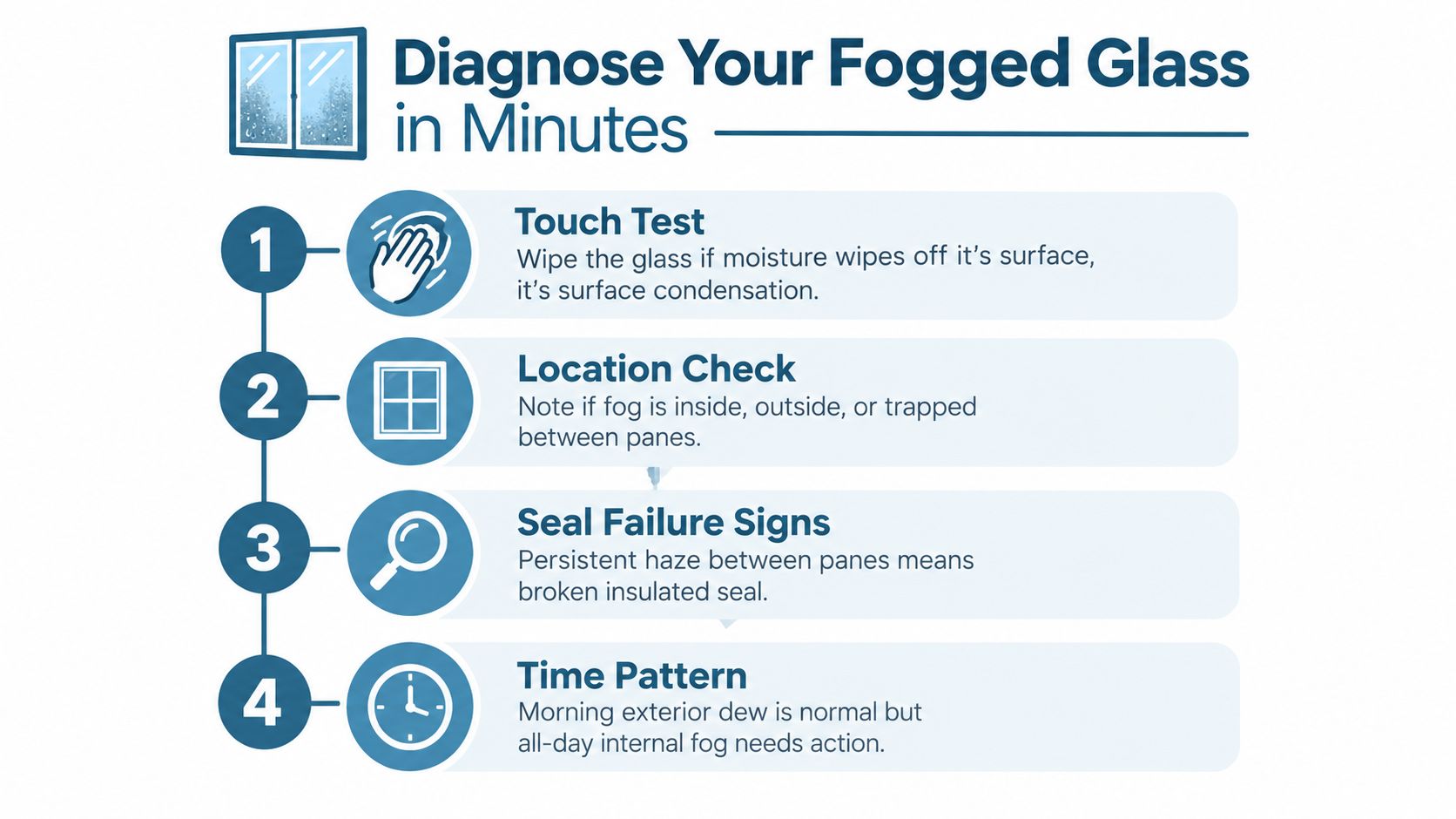
Start with a clean, dry microfiber cloth. Wipe the room side of the glass, then inspect the pane from an angle. If the haze disappears, you've found surface condensation. If it remains, wipe the exterior side where accessible. Haze that remains after both sides are clean may be trapped between panes, especially when the window has two distinct sheets of glass separated by a visible spacer.
Use the location and timing together
Interior condensation often shows up after a shower, cooking, laundry, or a cool night. It may collect along the lower edge or across the room-side surface and can usually be wiped away. Exterior dew is commonly noticed in the morning or during humid conditions, then clears as sunlight and outdoor temperature change. A persistent cloudy appearance between the panes doesn't respond to wiping because the moisture is inside the sealed cavity.
A window can also show temporary haze that clears as conditions change. Early seal degradation may allow intermittent fogging, while permanent haze can indicate that the unit's desiccant has become saturated. That timing pattern is useful, but it shouldn't override the wipe test. The decision point remains whether the moisture sits on a surface or inside the insulated glass unit, as explained in this practical guide to condensation inside home windows.
Compare dew point with glass temperature
For a more technical check, measure indoor temperature and relative humidity with a hygrometer, then calculate or read the corresponding dew point. Compare that value with the glass surface temperature using an infrared thermometer, while accounting for reflected surfaces and the limitations of inexpensive meters.
The NRC gives an example of air at 21°C and 35% relative humidity, with a dew point of about 5°C. A window surface near or below 5°C is therefore at high risk of fogging. The NRC method for comparing dew point and glazing temperature is more reliable than judging the room by feel.
Don't diagnose only from the center of the pane. Frames, spacers, corners, and installation gaps can create colder areas through thermal bridging. If the haze is between panes, record which sash, pane, and elevation are affected, then check the warranty before disturbing the unit.
Practical Fixes and Temporary Remedies You Can Try Safely
For surface condensation, begin with moisture control rather than window replacement. Run the bathroom exhaust fan during a shower and continue afterward, use the kitchen range hood when cooking, and keep air moving across the glass. A portable dehumidifier can help in a closed room, particularly when the air-conditioning system cools the space without removing enough moisture.

Wipe standing water from the sill with a soft cloth so it doesn't sit against wood, finish, drywall, or sealant. Move blinds, curtains, and furniture enough to let room air reach the pane. Clean accessible drainage paths and weep openings according to the window manufacturer's instructions, but don't poke objects into sealed glass edges or force debris deeper into the frame.
What helps and what doesn't
- Ventilation: Use exhaust fans where moisture is created, and give humid air a path out.
- Airflow: Keep supply-air movement and room circulation from being blocked by heavy curtains.
- Humidity measurement: Use a hygrometer instead of guessing whether the room feels damp.
- Gentle cleaning: Choose a soft cloth and a mild cleaner approved for the glass, tint, and frame finish.
- Prompt drying: Remove water from the sill and frame before it can cause staining or material damage.
A hair dryer may warm a surface briefly, but it won't correct the air conditions or repair a failed seal. Drilling holes into double-pane glass is also a poor DIY choice. It can damage the unit, leave the insulating cavity compromised, and create a warranty problem without restoring factory-sealed performance.
If the haze is trapped between panes, a professional defogging service may improve visibility temporarily in some situations, but it doesn't turn a failed seal into a new factory-sealed unit. Ask what the process restores, what it doesn't restore, and how it affects the existing warranty before approving the work.
A bathroom window that clears after ventilation needs a different response from a living-room picture window that stays cloudy all day. For the first, manage moisture and airflow. For the second, document the condition and have the sealed unit inspected.
When to Repair Replace or Call a Pro in Texas
The right decision depends on what failed, not how old the window is. A loose latch, worn weatherstripping, or a minor frame leak may justify a sash or hardware repair. If the frame remains straight, dry, and structurally sound while the insulated glass is fogged between panes, replacing only the IGU often preserves the surrounding window and avoids removing a sound frame.
Full replacement makes more sense when the frame is damaged, warped, poorly installed, repeatedly leaking, or incompatible with the performance you need. It can also be the cleaner choice when multiple openings have failed and the existing units show widespread deterioration. A site inspection should distinguish cosmetic glass failure from problems involving the sill, flashing, drainage, or surrounding wall.
Texas heat changes the stress profile
Texas windows face strong sun, hot exterior temperatures, air-conditioned interiors, and repeated pressure and temperature cycling. Technical guidance identifies thermal stress, pressure cycling, ultraviolet exposure, and edge-design limitations as contributors to sealed-unit failure. A window that survives in a mild setting may face a tougher service environment on a west-facing elevation or beneath a dark overhang.
Long-term data also show why age alone isn't a sufficient warranty test. One Canadian housing research report recorded a 4.8% fogging rate by year 25 for one IGU group, while a newer group using improved sealants and spacers recorded 1.3% after 15 years, a difference the report describes as roughly a twofold reduction at the comparable age benchmark. The Canadian housing research report on IGU durability supports checking seal and spacer design, not just the calendar.
Another NIST-hosted proceeding models expected failures when mean failure time is 50 years, with about 18% by year 10 and 33% by year 20. An academic thesis in the cited durability material reported that 63% of failed energy-efficiency glazing units in its sample failed because of fogging phenomena. These figures describe specific research contexts, not a guarantee for every Texas window, but they reinforce the need to inspect the actual unit and warranty terms.

Read the warranty before choosing a repair
Find the manufacturer, product line, installation date if available, and the affected opening. Warranty coverage may address moisture between panes or seal failure, but labor, shipping, glass-only replacement, and color or grille matching can differ. Don't authorize drilling, edge cutting, or unauthorized resealing before confirming the warranty requirements.
A Texas window supplier and installer such as Breaking Glass Co. can help with measurement, product ordering, installation, and warranty coordination. For homeowners weighing the larger question, when to replace windows is useful as a planning reference. Ask for a written scope that identifies whether the proposal covers the sash, the IGU, or the complete window.
Preventing Future Fogging and Next Steps for Texas Homes
Use a simple seasonal routine. Check the humidity in rooms that fog first, run exhaust fans where moisture is produced, keep supply and return airflow clear, and inspect sills, corners, spacers, and frame edges for recurring haze. In hot weather, pay special attention to west-facing glass and rooms that stay closed while the air conditioner runs.
Choose insulated glass assemblies with a properly designed edge seal and install them with careful attention to alignment, drainage, flashing, and perimeter sealing. A higher nominal U-value alone doesn't guarantee trouble-free service. The durability information above points toward the combined importance of seal design, spacer selection, installation quality, and climate exposure.
For homes with persistent moisture, controlled drying and dehumidification can be part of a broader moisture-management plan. Guidance on controlled drying techniques for restoration is relevant when condensation accompanies a leak, damp building materials, or a larger indoor moisture problem.
Monitor a window when the haze is clearly surface moisture that clears after humidity and airflow improve. Call for an evaluation when fog stays between panes, returns in the same unit despite dry indoor conditions, appears across multiple openings, or comes with frame damage and water intrusion. Photograph the haze in different weather, note whether it wipes away, and gather warranty paperwork before the appointment.
Breaking Glass Co. can measure fogged insulated glass units, help determine whether a glass-only replacement or full window replacement makes sense, and coordinate installation and warranty support for Texas homes and projects. Visit Breaking Glass Co. to request a quote and get a practical recommendation for your specific window.