
You know the feeling. One bedroom stays hot by lunch, the living room never quite cools down, and the utility bill says the windows are part of the problem even if they look fine from the street. In Texas, that kind of discomfort usually isn't fixed by swapping glass alone, because the work happens in the opening, the frame, the flashing, and the way the unit is sealed into the wall.
Window installation services matter because a window is only as good as the installation behind it. The market is crowded, the products are varied, and the job can go wrong in ways that don't show up until the first storm or the first long stretch of heat. A proper install protects comfort, water resistance, and the performance rating the manufacturer promised.
Table of Contents
- Why Professional Window Installation Matters in Texas
- The Window Installation Process from Quote to Warranty
- Full-Frame Replacement vs. Pocket Installation
- Installation Standards That Protect Your Investment
- Energy Savings and Home Comfort Benefits
- Choosing the Right Service Provider for Your Needs
Why Professional Window Installation Matters in Texas
East Texas homeowners know the pattern. A room feels muggy by midday, the AC keeps cycling, and the same window area always feels warmer than the rest of the house. That isn't just a product problem, it's often an installation problem, because a good unit can still underperform if the opening is out of square, poorly flashed, or sealed with the wrong materials.

A lot of homeowners start by comparing styles, then assume the labor is straightforward. In practice, the installer has to manage the opening, keep the frame square, preserve drainage paths, and make the finished unit behave like the one on the label. If any of that is off, the glass may look new while the home still leaks air, holds heat, or develops water problems.
Practical rule: if a quote treats installation like a simple swap, ask what happens to rot, flashing, shimming, and perimeter sealing.
Texas weather makes those details more important, not less. Heat exposure pushes cooling loads up, and any defect around the window opening gives that heat an easier path indoors. That's why professional window installation services aren't just about appearance. They're about making the whole wall assembly work as intended, especially in homes where the old frame may already have hidden damage or construction gaps.
A good installer also knows when the opening itself needs attention before the new unit goes in. That can save a homeowner from spending money on a premium window only to bury a problem behind trim. The window may be the visible upgrade, but the opening is where the durability gets decided.
The Window Installation Process from Quote to Warranty
A serious contractor starts long before installation day. The first visit should include measurements, condition checks, and a discussion of whether the existing frame is worth keeping. That matters because the quote needs to reflect the scope, not just the size of the glass.
The ordering stage should be clear about product lead time, options, and what's included in the labor. The homeowner should know whether the company is handling removal, disposal, trim work, and final sealing, because those details change the cost and the quality of the result. If you want a helpful overview of timing expectations, this installation timeline guide gives a practical frame of reference.
What should happen before the crew arrives
The best crews verify the opening, confirm the unit sizes, and make sure the chosen product fits the wall condition. That reduces surprises on install day. It also keeps the project from turning into a patch job where the installer is forced to improvise around bad measurements.
On installation day, a clean workflow usually looks like this:
- Remove and inspect: the old unit comes out, and the opening gets checked for rot, moisture issues, and frame distortion.
- Set and shim: the replacement is positioned so the frame stays square and the moving parts operate correctly.
- Seal and finish: the perimeter gets sealed, flashed, and trimmed so the assembly sheds water and resists air leakage.
- Test and walk through: the homeowner should see every sash, lock, and latch function before the crew leaves.
The walkthrough is where a lot of problems get caught. If a sash drags, a lock doesn't line up, or caulk has been skipped at a corner, that needs to be addressed before the job is considered done.
Warranty paperwork should be specific enough to tell you what the product covers and what the installer covers. That distinction matters more than most salespeople admit. A strong warranty only helps if the company stands behind both the window and the labor that made it work.
Full-Frame Replacement vs. Pocket Installation
Homeowners often get sold on the idea that all replacement windows are basically the same. They aren't. Full-frame replacement and pocket installation solve different problems, and the wrong choice can leave hidden damage in place.
Full-frame work removes the entire existing unit, down to the original frame. That gives the installer a chance to deal with rot, insulation voids, warped framing, or bad water management around the opening. It's the better choice when the old window has concealed problems or when the opening itself needs to be resized.
Pocket installation, sometimes called insert replacement, keeps the existing frame and sets the new unit inside it. That makes the job less invasive and faster, and it can be a smart choice when the old frame is still sound. The tradeoff is that any unseen damage stays where it is, and the visible glass area may shrink slightly.
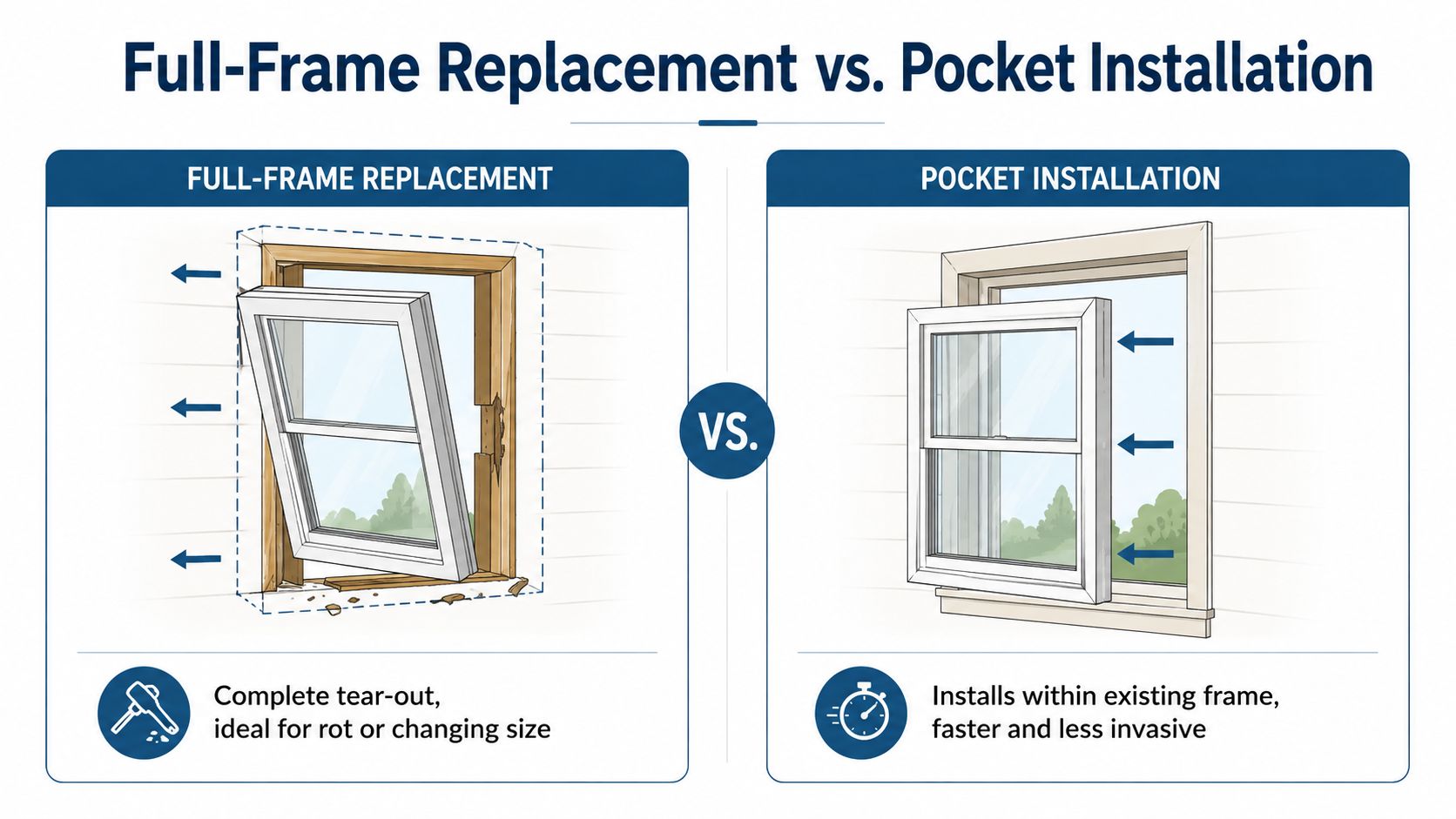
The decision should come from the condition of the opening, not from whatever the sales script happens to favor. If the trim is soft, the frame is out of plane, or there's evidence of moisture, full-frame replacement is often the more honest fix. If the structure is clean and stable, a pocket job can be a sensible way to reduce disruption.
Good installers don't hide the frame condition. They show you what's there, then recommend the method that solves the problem instead of the one that looks cheapest on paper.
That's especially important in older Texas homes, where what you see on the surface doesn't always match what's happening behind the casing. The best window installation services explain the structural trade-off clearly and price the scope accordingly.
Installation Standards That Protect Your Investment
A window can be well-built and still fail to perform if the install breaks the system around it. The standard that matters most is not just whether the unit is attached, but whether it preserves the manufacturer's intended pressure and weather performance. That starts with a rough opening sized correctly, with one specification calling for openings roughly 1/4" to 1" wider and 1/4" to 1/2" taller than the frame, then supporting the unit with shims placed 4" to 6" from each corner, plus additional shims at 15" on center and at locking points.
That shim pattern isn't busywork. It helps keep the frame square so the sash operates correctly and the seals compress the way they're supposed to. If the frame twists, the window can bind, leak air, or lose the performance the label promised.
The sealing materials matter just as much. One installation specification calls for Grade NS Class 25 sealant under ASTM C920 and low-expansion foam under ASTM E2112. Those details matter because oversized gaps, incompatible caulk, or the wrong foam can create air leakage and water intrusion instead of stopping them.
What to ask before you approve the work
- What flashing method will you use? The opening should be tied into the water management layer, not just caulked at the edges.
- How will you handle shims and support? A good installer can explain the support pattern without guessing.
- What sealant and foam are going in? The product names and standards should be clear.
- How will you verify the unit stayed square? Operation testing should happen before trim hides the frame.
The energy side of installation is just as important. Government replacement-window guidance ties selection to U-factor limits and, in air-conditioned homes, low SHGC limits on east- and west-facing windows because lower SHGC reduces solar heat gain in hot climates. That only matters if the installation is airtight and properly integrated with the water-resistive barrier, which is why the best results come from the whole system, not just the glass package.
If you're comparing performance-oriented options, impact-resistant glass guidance is worth reviewing alongside the install method. A strong product spec still needs a careful, code-aware installation to deliver the benefit you paid for.
Energy Savings and Home Comfort Benefits
The reason most homeowners replace windows isn't abstract. They want a house that stays cooler, feels tighter, and costs less to run. That's exactly where installation quality shows up, because the difference between a sealed assembly and a leaky one is something you feel every day, not just on the utility bill.
A 2026 homeowner survey cited by This Old House's window survey reported that over 89% of 1,000 homeowners saw lower monthly energy bills after installing new windows, and most said they saved $25 to $50 per month on average. The same source says the average installed window cost is about $477 per window based on a 2025 survey, while broader 2026 industry data places average U.S. new-window installation at $4,500 per project, with a range of $2,000 to $7,500. Those numbers help frame the purchase as a comfort upgrade and a utility strategy, not just a cosmetic change.
What makes the difference in real homes
Windows with low-e glass, argon fill, and better spacers can perform well, but only if the installer keeps the assembly airtight and correctly flashed. In hot Texas conditions, east- and west-facing glass deserves extra attention because those exposures take the hardest solar load. If the install leaves gaps around the frame, the rated performance gets undermined at the perimeter.
Industry data cited in the same survey shows that 68% of new residential window installations in 2023 were energy-efficient, up from 52% in 2019. That shift makes sense. Homeowners have learned that the product choice matters, but the installation is what lets the product work.
A well-installed window doesn't just reduce drafts. It makes rooms usable again by keeping the glass, frame, and wall opening working together.

If you're comparing thermal specs, this U-factor and R-value guide helps translate the technical labels into practical comfort. In Texas, that translation matters because a window that looks efficient on paper still has to survive heat, sunlight, and daily use once it's in the wall.
Choosing the Right Service Provider for Your Needs
The best provider is the one that can explain the product, the opening, and the warranty without dodging any of them. That usually means you want a contractor who measures carefully, offers the right replacement method for the home, and has a real plan for post-installation support. In a fragmented market with thousands of businesses competing for the same jobs, that combination is what separates a smooth project from a frustrating one. IBISWorld's industry profile shows 28,247 businesses in the U.S. window installation industry in 2026, which helps explain why quality and pricing vary so widely.

What should drive your decision
Local experience matters because Texas homes face heat, sun exposure, and storm-driven wear that generic national scripts don't always account for. Product range matters too, because a contractor who only pushes one window type may not be matching the opening to the actual problem. Warranty support matters because the person who sold the job should still be reachable when a sash needs adjustment or a seal needs review.
A few practical filters help:
- Ask for measurement detail. If the company can't explain how it confirms sizing and opening condition, that's a red flag.
- Ask how it handles replacement method. A provider should tell you when full-frame is necessary and when pocket replacement is enough.
- Ask about service after install. Warranty support should be part of the conversation, not an afterthought.
- Ask who does the work. In-house installation and clear coordination usually reduce confusion on job day.
Breaking Glass Co. is one example of a provider that supplies and installs residential and commercial windows and doors, including replacement work in Texas, factory-direct product sourcing, and quoted installation support. That kind of model fits projects where the homeowner wants one team handling measurement, ordering, and install rather than juggling separate vendors.
The right choice usually isn't the lowest quote or the flashiest product line. It's the company that can match the window, the opening, and the climate with a clean installation plan.
If you're ready to replace windows that still leave the house hot, drafty, or overworked, talk with a team that understands how Texas conditions affect the install from day one. Visit Breaking Glass Co. to request a quote and get window installation services built around the way your home performs.