
National averages for vinyl window replacement cost hover around $600 per unit installed, but actual Texas project quotes vary wildly based on whether the job requires a simple insert or a full-frame teardown. In practical terms, most installed vinyl windows fall somewhere around $300 to $800, while complicated openings and whole-house work can push the total much higher (Modernize).
The popular advice is to search for one “average” price and use it as your budget. That's the wrong starting point for a Texas house. A window quote isn't just a product price. It reflects the opening condition, installation method, glass package, access, trim, disposal, permits, and the crew's responsibility for making the new unit watertight.
A basic vinyl insert in a sound opening can be a sensible, cost-controlled repair. A full-frame replacement that exposes rot, damaged sheathing, or failing trim is a different construction project. If a contractor gives you a low per-window number without defining the scope, you don't have a budget yet. You have an incomplete sales pitch.
Table of Contents
- The Reality of National Averages Versus Local Quotes
- Insert Replacement Versus Full-Frame Teardowns
- Physical Variables That Inflate the Final Bill
- How Factory-Direct Pricing Changes the Math
- Evaluating Resale ROI and Energy Payback
- Protecting the Investment with Lifetime Warranties
- Steps to Secure an Accurate Project Estimate
The Reality of National Averages Versus Local Quotes
National averages are useful for orientation, not for signing a contract. Recent guides place installed vinyl windows around $300 to $800 per window, with one estimate reporting approximately $391 to $834 per window, or about $25 to $50 per square foot installed (Modernize). Those figures support vinyl's reputation as the lower-cost mainstream replacement frame, but they don't tell you what a Texas contractor will find behind your exterior trim.
The difference starts with scope. A quote may include the window, removal, labor, disposal, interior stops, exterior capping, insulation, sealant, and cleanup. Another may price only the replacement unit and basic installation. Both contractors can advertise a “per-window” price while describing completely different jobs.
Why the shelf price is misleading
A window sitting in a retail aisle is a manufactured product. Your replacement project is a field installation with measurements, preparation, fitting, weatherproofing, and finishing. Custom dimensions, difficult access, unusual openings, and damaged framing all change the labor involved.
Texas homes add their own practical concerns. Intense sun exposure makes glass selection and exterior durability more important, while heat places a premium on controlling solar gain and air leakage. In older homes, the existing frame may not be square, and retrofit work can require more adjustment than a calculator assumes.
Practical rule: Treat an online average as a screening number. Treat the written scope of work as the real price.
What a Texas quote should reveal
Ask every contractor to identify the following in writing:
- Installation method: Confirm whether the proposal uses an insert or full-frame replacement.
- Opening preparation: Look for language covering damaged wood, insulation, flashing, and air sealing.
- Finish work: Confirm whether interior trim, exterior trim, capping, and paint-related work are included.
- Removal and disposal: Make sure the old units and job debris won't become an extra charge.
- Product specification: Require the exact frame, glass package, color, hardware, and operating style.
Project-level estimates show why quantity alone doesn't predict the final bill. A typical 10- to 15-window home has been estimated at roughly $5,090 to $24,000 installed, depending on project conditions and product choices (Remodel Calculators). That spread isn't a typo. It's a warning that “average per window” hides the construction decisions that matter most.
Insert Replacement Versus Full-Frame Teardowns
The most important question on your proposal is not whether the window is vinyl. It's whether the installer is reusing the existing frame or removing the assembly back to the rough opening.
An insert replacement, sometimes called a pocket replacement, fits a new window inside the existing frame. The installer removes the operable sashes and related components, checks the opening, places the new unit, insulates and seals it, then completes the interior and exterior finish. This approach usually preserves existing trim and reduces demolition.
A full-frame teardown removes the old window and frame down to the rough opening. The crew can inspect the surrounding structure, replace damaged materials, improve flashing, and install a new frame with more control over the opening. That broader access comes with more labor, more restoration, and a greater chance of uncovering conditions that weren't visible before demolition.

When an insert makes sense
Choose an insert when the existing frame is structurally sound, reasonably square, and properly integrated with the wall. It's the sensible option when your goal is to improve operation, sealing, and appearance without disturbing good trim and surrounding construction.
The financial difference is substantial. One guide places a 12-window vinyl-insert project at roughly $3,150 to $11,200, while a full-frame version of the same home is estimated at about $4,950 to $17,350 (Remodel Calculators). The same source describes full-frame work as potentially costing about 1.5 to 2 times more, because the installer removes more material and performs more restoration.
You can learn the basic field sequence in this guide to install vinyl replacement windows, but homeowners should distinguish between understanding the process and taking responsibility for a weather-tight installation.
When full-frame work is the right repair
Full-frame replacement is justified when the old frame has rot, water damage, movement, or failed exterior components. It's also the better choice when you want to change the opening, expose hidden conditions, maximize the glass area, or correct poor prior installation.
Labor alone commonly runs $100 to $300 per window, with complex or large units reaching $600 (Remodel Calculators). Those figures explain why two bids for the same number of windows can differ sharply even when the vinyl products look similar.
Before signing, ask the contractor to show you exactly where the insert stops and where the full-frame scope begins. If the proposal uses vague wording such as “replace window and trim as needed,” request a defined allowance or a documented process for unexpected damage. That conversation is cheaper than discovering the difference after the wall is open.
Physical Variables That Inflate the Final Bill
Once the installation method is clear, the window itself becomes the next cost driver. A standard double-hung opening is easier to manufacture, carry, fit, and finish than a large specialty unit. A quote based on standard openings can become inaccurate as soon as the project includes oversized glass, unusual shapes, or difficult access.
Size affects more than the material invoice. Large units weigh more, require more careful handling, and may need additional framing or support. Bay and bow windows are especially demanding because they project from the wall and can involve structural framing, roof or head flashing, interior finishing, and several connected windows. A national cost guide places installed replacement windows broadly between $509 and $1,600 per window, with an average near $749, while standard vinyl units are reported around $509 to $681 (Get Window Cost).
Separate comfort upgrades from appearance upgrades
Texas homeowners should spend carefully on glass. Low-E coatings, insulated glass, and gas-filled assemblies can help manage solar heat and improve interior comfort, but the installer must match the glass package to the home's exposure and the frame's specifications. A premium label doesn't compensate for poor air sealing or incorrect installation.
Prioritize the items that affect daily performance:
- Solar control: Select glass appropriate for strong sun exposure, especially on heavily exposed elevations.
- Insulated assemblies: Use a specification that supports the comfort goals of the room and the home's existing heating and cooling system.
- Air sealing: Confirm that the crew insulates and seals the perimeter rather than relying on trim to hide gaps.
- Operation: Choose casements, sliders, or double-hungs based on ventilation and maintenance needs, not sales presentation alone.
Custom colors, interior wood-grain laminates, grids, decorative glass, and specialty hardware can raise the price without solving a comfort problem. They may be worthwhile for curb appeal or architectural consistency, but don't let an aesthetic upgrade consume the budget before the opening is properly protected.
Windows also interact with the rest of the building envelope. If replacement work reveals broader comfort or equipment concerns, homeowners and property investors can use a separate resource to estimate HVAC replacement for investors before treating the window project as an isolated expense.
How Factory-Direct Pricing Changes the Math
Traditional retail pricing can move a window through several hands before it reaches your house. A manufacturer sells through distribution, a retailer or dealer adds its margin, and an installer then prices labor, coordination, and warranty administration. That chain isn't automatically dishonest, but every layer can reduce the money available for better glass, stronger hardware, or more careful installation.
A factory-direct model changes where the budget goes. Instead of treating the window as a retail commodity, the supplier coordinates product selection, measurements, ordering, and installation around the actual project. The potential advantage isn't a lower sticker price. It's the ability to compare a climate-appropriate product and a defined installation scope without paying for unnecessary layers of procurement.

Retail convenience versus direct coordination
Big-box stores offer familiarity and broad access, but the homeowner may still need to determine who measures, who installs, who handles callbacks, and which party controls the warranty. A regional direct supplier can make those responsibilities clearer, particularly for builders and remodelers managing several openings or a defined construction schedule.
Factory-direct pricing also makes more sense when the product is selected for the local climate rather than chosen from a generic shelf. Texas projects need attention to sun, heat, severe weather, insulation, and water management. The frame matters, but the glass, seals, flashing, and installation details determine whether the product performs as intended.
Don't confuse direct pricing with a reason to skip due diligence. Request product specifications, written warranty terms, proof of insurance, installation details, and a clear service contact. A lower procurement cost is useful only when the installer still owns the quality of the finished opening.
This video provides another visual explanation of the factory-direct model and its relationship to window project pricing:
For a Texas homeowner, the strongest use of factory-direct savings is strategic. Put the money toward proper measurements, a suitable glass package, perimeter sealing, and complete finish work. Cutting those items to chase the lowest total is false economy.
Evaluating Resale ROI and Energy Payback
The right question isn't only, “What does the window project cost?” Ask, “How much of that investment can the house recover through resale, comfort, and lower operating demand?”
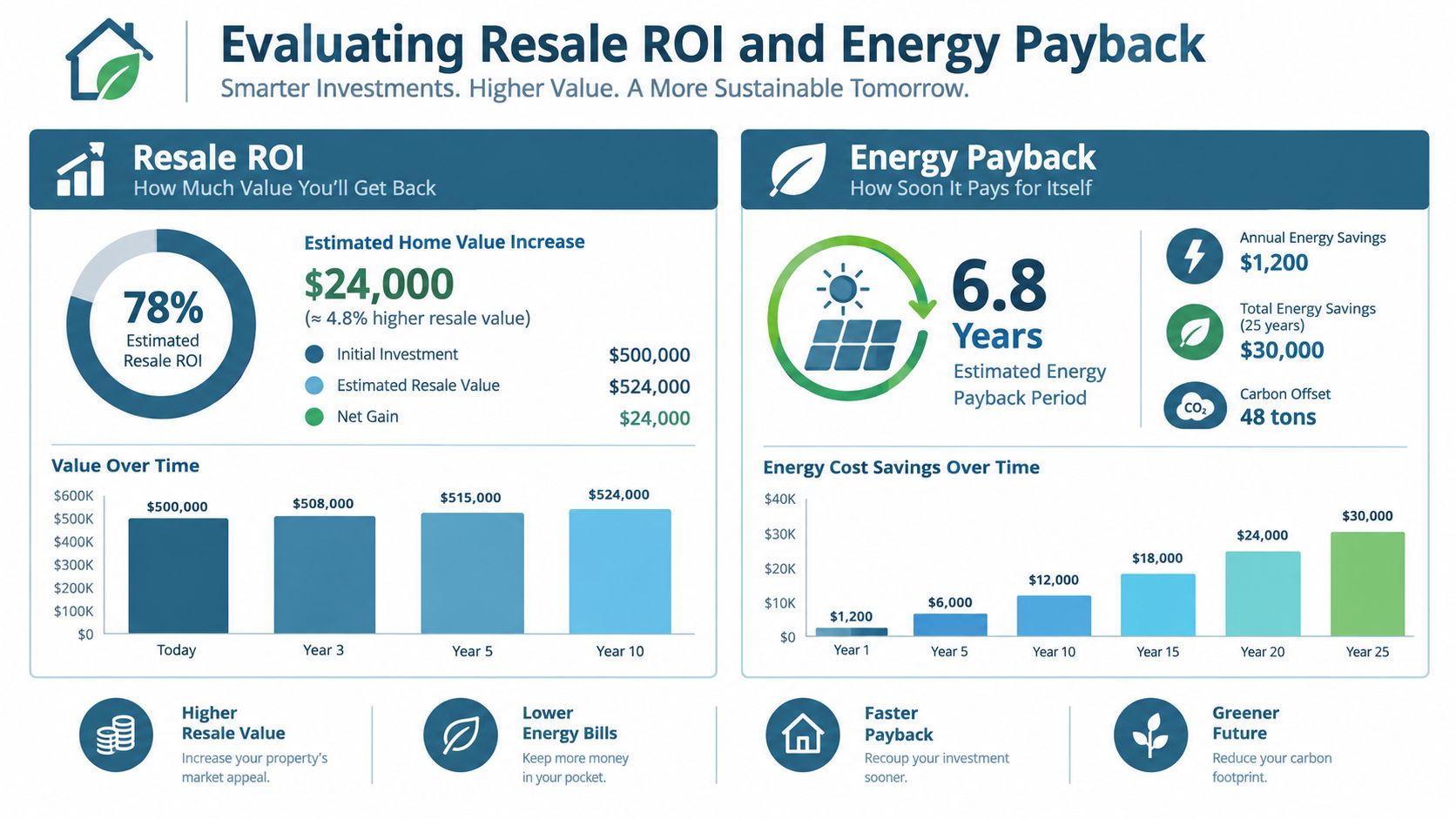
Regional Cost vs. Value data gives vinyl replacement a meaningful position in Texas-area decision-making. In the West South Central region, vinyl window replacement recoups about 75.5% of its cost, based on a reported 2025 job cost of $22,073 and resale value of $16,657 (B&V Window). That regional result doesn't guarantee a specific return for your property, but it does challenge the idea that vinyl is merely the cheapest short-term choice.
Think in three separate returns
Resale recovery is only one part of the calculation. A homeowner who stays in the property also receives value through improved room comfort, easier operation, reduced maintenance, and less unwanted heat transfer. Those benefits don't appear as a single line on an appraisal, but they affect whether the project feels worthwhile every day.
Energy payback is difficult to promise because it depends on the existing windows, house orientation, shading, thermostat habits, ductwork, insulation, and cooling equipment. Don't accept a contractor's dramatic savings promise without a documented basis. Instead, compare the project against your actual utility history and focus on the rooms with the worst heat gain or drafts.
Use ROI to choose scope, not just product
A full-frame teardown may protect the structure and correct water problems, while an insert may deliver a lower initial investment when the existing frame is sound. The financially responsible choice depends on the condition of the opening, not a blanket preference for one method.
For a deeper look at the investment question, review this guide to window replacement return on investment. The useful conclusion is straightforward: buy the installation scope the house needs, then select glass and design upgrades that support comfort and resale appeal.
A low quote can produce poor payback if it leaves leaks, failed seals, damaged trim, or difficult operation unresolved. A carefully scoped project can create value even when the initial number is higher, because the work addresses the cause rather than covering the symptom.
Protecting the Investment with Lifetime Warranties
A warranty is not a decorative page in the contract. It defines who takes responsibility when the glass seal fails, hardware stops operating, the frame develops a problem, or installation defects appear. The cheapest window can become the most expensive choice if the manufacturer and installer each point at the other when something goes wrong.
Start by separating the product warranty from the installation warranty. The manufacturer may cover the window components, while the installer covers labor, perimeter sealing, flashing, or workmanship. If the contract doesn't identify those responsibilities, you may have coverage in theory but no clear path to service.
Read the exclusions before the promises
Ask for the complete warranty document, not a sales summary. Check whether it addresses:
- Insulated glass: Confirm the process for glass seal failure and replacement labor.
- Hardware: Ask how locks, balances, rollers, handles, and other operating components are handled.
- Frame performance: Look for terms covering defects, warping, distortion, or material failure.
- Installation workmanship: Verify who pays to diagnose and correct leaks, gaps, or improper fitting.
- Transfer rules: Determine whether coverage changes if you sell the home.
A lifetime warranty can still contain exclusions for misuse, unauthorized alterations, environmental damage, or installation performed outside manufacturer requirements. Those limitations aren't necessarily unreasonable, but you need to understand them before comparing bids.
A warranty is only as useful as the company that will answer the phone when the installation crew is gone.
Local service capacity matters in Texas because a manufacturer's guarantee doesn't put a technician in your driveway. Look for a defined business address, identifiable service contact, written documentation, and a company prepared to coordinate both product and installation concerns. Bilingual support can also make project communication and future service clearer for more households.
Breaking Glass Co. describes lifetime warranty coverage on windows as part of its window offering. Treat that as a starting point for questions, then read the actual terms and confirm whether the coverage applies to the specific product, installer, property, and service situation in your contract.
Steps to Secure an Accurate Project Estimate
A reliable estimate begins at the house, not in a browser calculator. The contractor needs to inspect each opening, measure the existing conditions, identify the installation method, and document the finish work. Rough counts can help start a conversation, but they shouldn't determine the contract price.
Follow a disciplined quoting process
-
Inventory every opening. Record location, operating style, approximate condition, access issues, and any specialty shape. Don't describe a bay, bow, picture, or oversized unit as an ordinary replacement.
-
Demand an installation diagnosis. Ask whether each opening receives an insert or full-frame treatment, and ask the contractor to explain why. If the methods differ across the house, the proposal should identify that window by window.
-
Specify the product. The quote should name the frame series or product line, glass configuration, coatings, gas fill if selected, color, grids, hardware, and operating style. “Energy-efficient vinyl” isn't a sufficient specification.
-
Define the construction scope. Confirm removal, disposal, trim preservation or replacement, insulation, flashing, sealant, interior stops, exterior capping, cleanup, and permit-related responsibilities. If damage is discovered, require a written change-order process.
-
Compare the warranty. Separate manufacturer coverage from installer workmanship coverage. Ask who handles the first service call, who pays labor, and where you should report a failure.
-
Review schedule and responsibility. Builders and remodelers should confirm measurement dates, ordering responsibility, delivery coordination, installation sequencing, and final inspection. A low bid that misses the construction schedule can cost more through delays and rework.
Get proposals that describe the same scope before comparing totals. One contractor may be pricing a fast insert installation, while another is including full-frame restoration, upgraded glass, and more complete warranty support. Those aren't competing prices until the work is comparable.
For homeowners and contractors across Texas, Breaking Glass Co. supplies vinyl replacement and new-construction windows, supports measurement and ordering, offers installation, and provides quotes for residential and commercial projects. Visit Breaking Glass Co. to request a project review and discuss a factory-direct window package suited to your openings, installation scope, and Texas climate.