
An installed entry door replacement commonly runs about $950 to $6,700 per door. Materials usually account for about $500 to $4,500 and labor for about $450 to $2,200, and a typical standard job averages near $1,800.
That spread is why entry door replacement cost is a project range, not a sticker. A national average screens the job. It doesn't price your opening. The slab is one line on the invoice. The frame, the rough opening, the glass, and whatever is soft at the sill decide whether you stay with a straightforward swap or pay to rebuild the hole in the wall.
I would not compare two bids until each one states whether the existing frame stays. A sound, square opening and a rotten, out-of-square one can carry the same door model and still produce different invoices.
Table of Contents
- Installed Entry Door Replacement Cost Ranges
- What Turns a Door Swap Into a Full Opening
- How Material Glass and Sidelights Change the Bill
- Labor Complexity and Regional Price Shifts
- Sample Projects From Swap to Custom Entry
- Resale Return Versus Energy Savings
- Get a Line Item Quote for Your Opening
Installed Entry Door Replacement Cost Ranges
The national installed range runs from $950 to $6,700 per door, with materials typically $500 to $4,500 and labor $450 to $2,200, according to Remodeling Expense's replacement entry door cost guide. The guide also puts a typical replacement at roughly $1,000 to $3,500, with an average near $1,800. That typical band fits a standard single-door project better than a custom or glass-heavy entry. These figures are screening ranges, not a bid for a specific opening.
The installed price depends on what stays and what gets replaced. A like-for-like swap in a sound opening can fall toward the lower end; frame work, customization, or repairs push the bill higher. Compare the full installed scope, not just the door unit.
Typical installed cost ranges
| Scope | Installed range | What the range covers |
|---|---|---|
| Overall project | $950–$6,700 | Materials about $500–$4,500 plus labor about $450–$2,200 |
| Typical standard single door | $1,000–$3,500 (average near $1,800) | A standard replacement, rather than a custom or glass-heavy entry |
The main price drivers are whether the job replaces only the slab or the full prehung unit, the condition of the existing frame, door size, glazing, hardware, finish, and repairs to the opening. Ask the contractor to itemize the door, frame, labor, disposal, permits, hardware, sidelights or transoms, and opening repairs. Separating structural work from finish choices also helps when comparing other remodel budgets, including basement finishing costs in Vancouver.
Practical rule: Use the typical range to screen a standard swap. The condition and scope of your opening determine whether that range fits your project.
What Turns a Door Swap Into a Full Opening
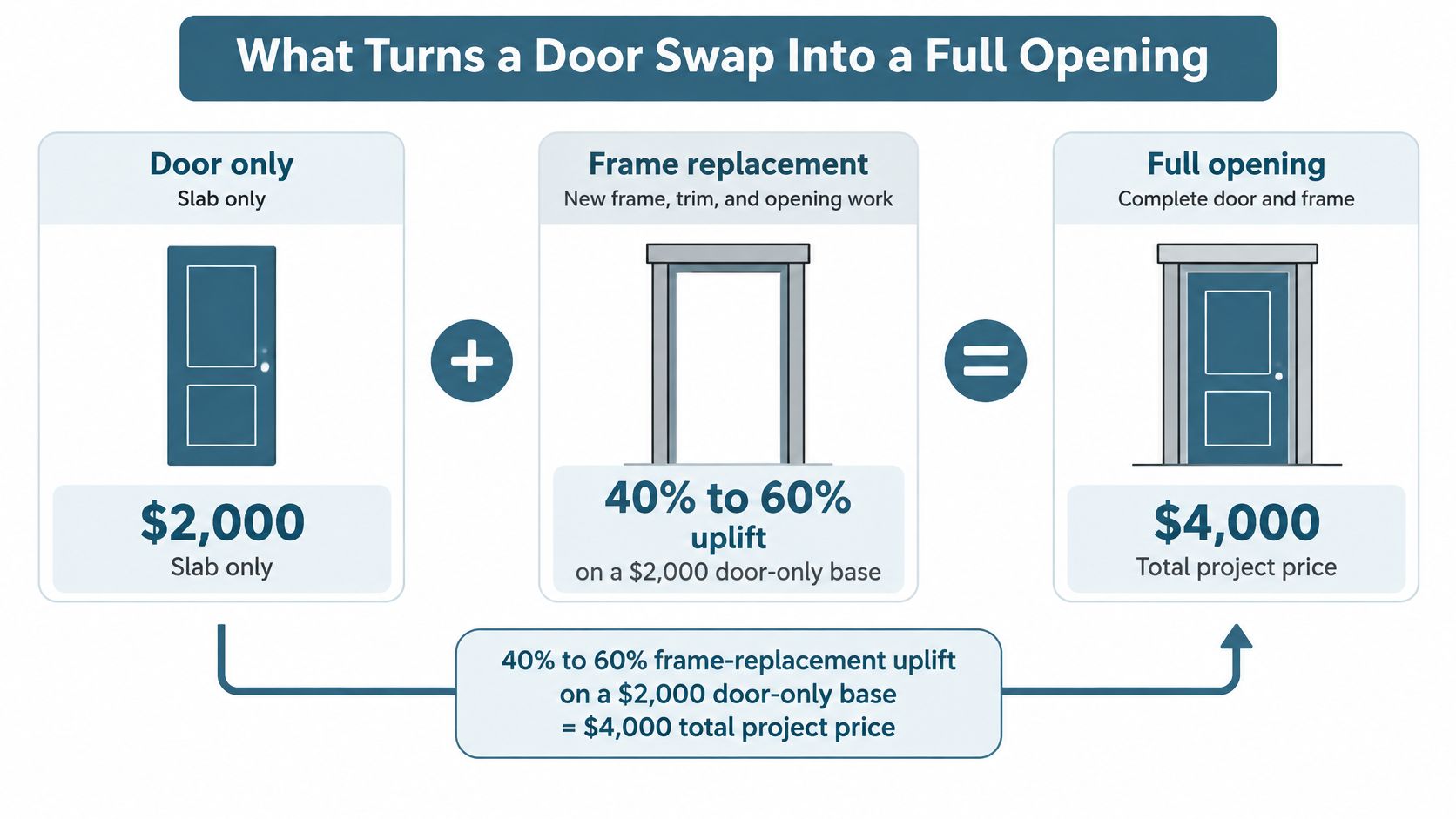
Take two bids for the same door: one at $2,000 for a door-only swap, and another at $4,000 with frame work and other repairs included. The price difference comes down to scope. Industry market research cited on JLC's 2025 Cost vs. Value page estimates that replacing the frame may add 40% to 60% to a basic door-only installation.
On a $2,000 door-only price, that frame work brings the total to roughly $2,800 to $3,200. Sidelights, flashing, rot repair, or a size change can push the project higher. A lock swap is a small part of the job. A door and entrance frame forms part of the wall assembly, so its condition and replacement belong in the scope.
Four questions before you compare prices
- Is the frame sound? If the jambs and sill are solid and square, replacing the slab or prehung unit may remain a straightforward swap.
- Does the rough opening need a different size? A wider or taller unit can require new framing, trim, and exterior finish.
- Are sidelights or a transom part of the new assembly? Each glazed piece adds framing, flashing, and interior and exterior finish work.
- Is there rot, an out-of-square jamb, or active water intrusion? The cause and damage need to be addressed before the new door can seal.
A low bid may omit flashing, a sill pan, trim, haul-away, painting, or code-related work. Check the answers to these four questions against each quote. A price that skips the sill pan is a different scope, not a cheaper version of the same installation.
How Material Glass and Sidelights Change the Bill
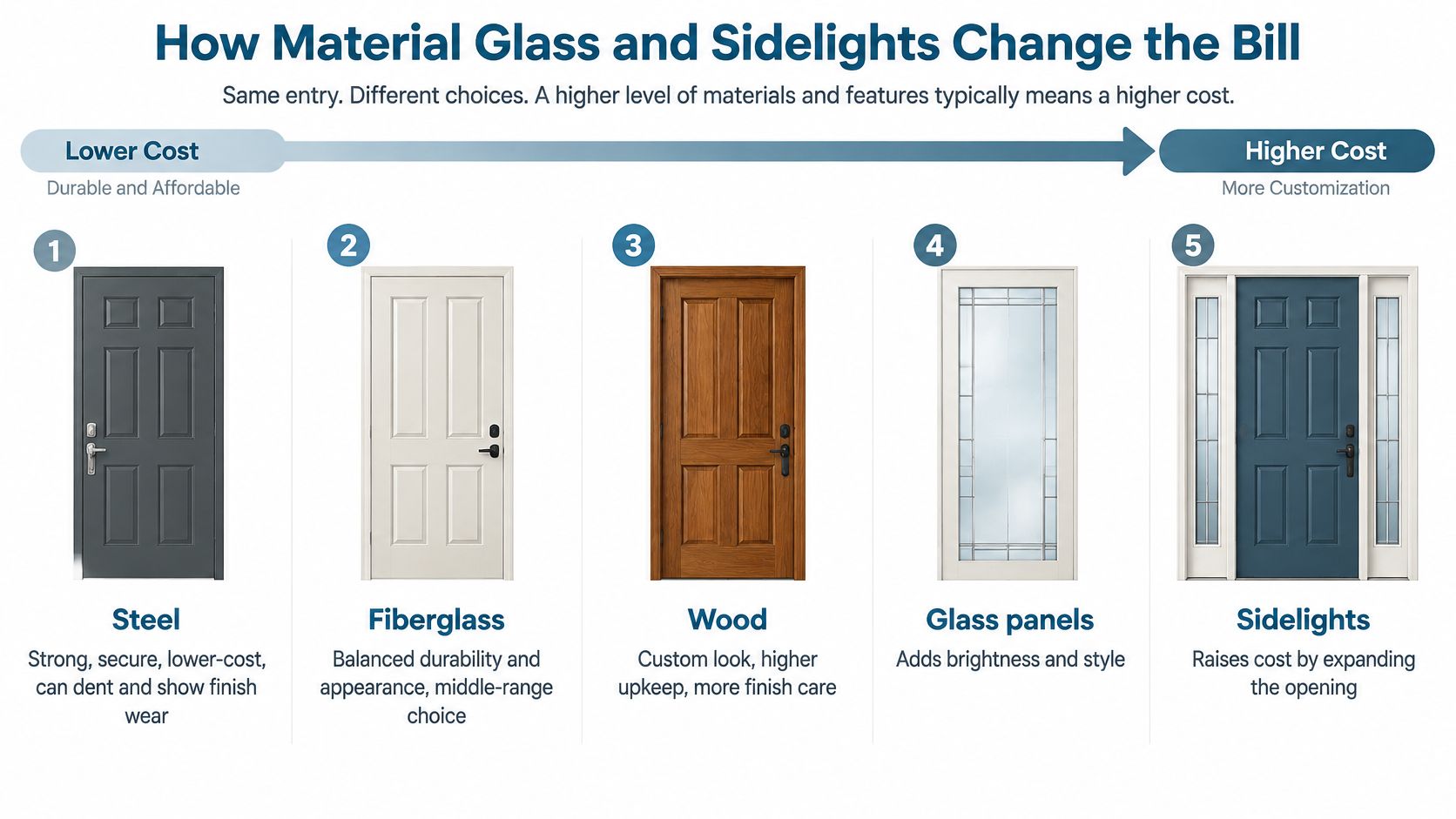
Price follows the skin of the door, then the glass, then how much of the wall you replace around it. Steel, fiberglass, and wood are not interchangeable once sun, rain, and a paint schedule enter the picture.
Steel is the lower-cost durable option. It is strong and feels secure, and a painted steel unit is the usual starting point when the opening is standard and the budget is tight. Dents show, and finish wear at the bottom rail is common where feet, pets, and hose spray hit the same spot. In direct sun the skin can feel hot at the hand, and a scratch that reaches bare metal needs a touch-up or it rusts.
Fiberglass sits in a middle-to-upper position. For a hot, high-sun house, it is the practical pick because it resists moisture swelling and can mimic wood without the same refinishing cycle. It won't rust, and it dents less than steel. It can chip if something hits it hard, and a cheap field modification is harder than on a wood slab. You are paying for appearance that holds up without a repaint every few seasons.
Wood is the premium end. Grain, stain, and a custom size cost more up front and more later if sun and rain reach the finish. It is the right call when the elevation is traditional and someone will maintain it. It is the wrong call if the door faces west with no overhang and nobody plans to refinish it.
Glass and side units are their own lever
A small lite is a modest add. Decorative, low-E, or large glazed panels move the job into a glass-heavy assembly and change both comfort and the lock hardware you can use. Sidelights and transoms are not trim. Each is another glazed unit with its own frame, flashing, and interior and exterior casing. A fiberglass entry door with sidelights and a transom reprices the opening rather than decorating the slab you already priced.
Hardware belongs in the same decision. A standard handleset and deadbolt is one labor stop. A multi-point lock takes longer to align. A factory finish is priced into the unit. A field paint job is a separate trip, and it fails first at the threshold if the prep is thin.
Choose the material for the climate and the glass package for light and privacy. Expect sidelights or a transom to reprice the opening.
Labor Complexity and Regional Price Shifts
Once someone is on site, the slab is often not the swing factor. A Remodel Your Home cost guide places a professionally installed entry-door replacement around $1,100 to $3,800 for standard steel or fiberglass configurations, while premium wood, oversized, double-door, sidelighted, or custom-framed assemblies can exceed $6,000. That professional-installation band is a second screen, separate from a typical single-door average. It is still not a local bid.
Sound opening versus a damaged one
Replacing a prehung unit in a sound existing opening generally limits labor. Damaged framing, a nonstandard rough opening, trim reconstruction, sidelights, transoms, electrical work such as a doorbell or smart lock, or masonry changes can raise labor from several hundred dollars to more than $1,500. A low-cost door becomes an expensive project when the install needs reframing or heavy finish work.
The unit has to end up plumb, level, and square. If it doesn't, the latch misses, the weatherstripping compresses on one side only, and the threshold holds water or leaks air. You pay for that correction either in the original labor or in a callback.
What to check before you shop the slab
- Measure the rough opening. Width, height, and jamb depth, not the old slab size.
- Inspect the frame at the sill and both jambs. Probe the sill with a screwdriver. Soft wood means the frame is part of the job.
- Photograph rot, cracked brick, and any out-of-square gap. Those photos are what keep a phone quote honest.
- Only then compare door prices. Product shopping before the opening is known is how a cheap slab turns into a reframed entry.
Regional labor rates and configuration complexity mean national averages are screening benchmarks. High-cost metros price the same scope higher. A Texas job should be quoted locally rather than copied from a national article. Fiberglass often lands in a middle-to-upper price position on that same professional scale, which is a product choice, not a labor discount.
Sample Projects From Swap to Custom Entry
Three houses make the bands recognizable. The useful comparison is story to story, not the cheapest advertised slab against a custom opening.
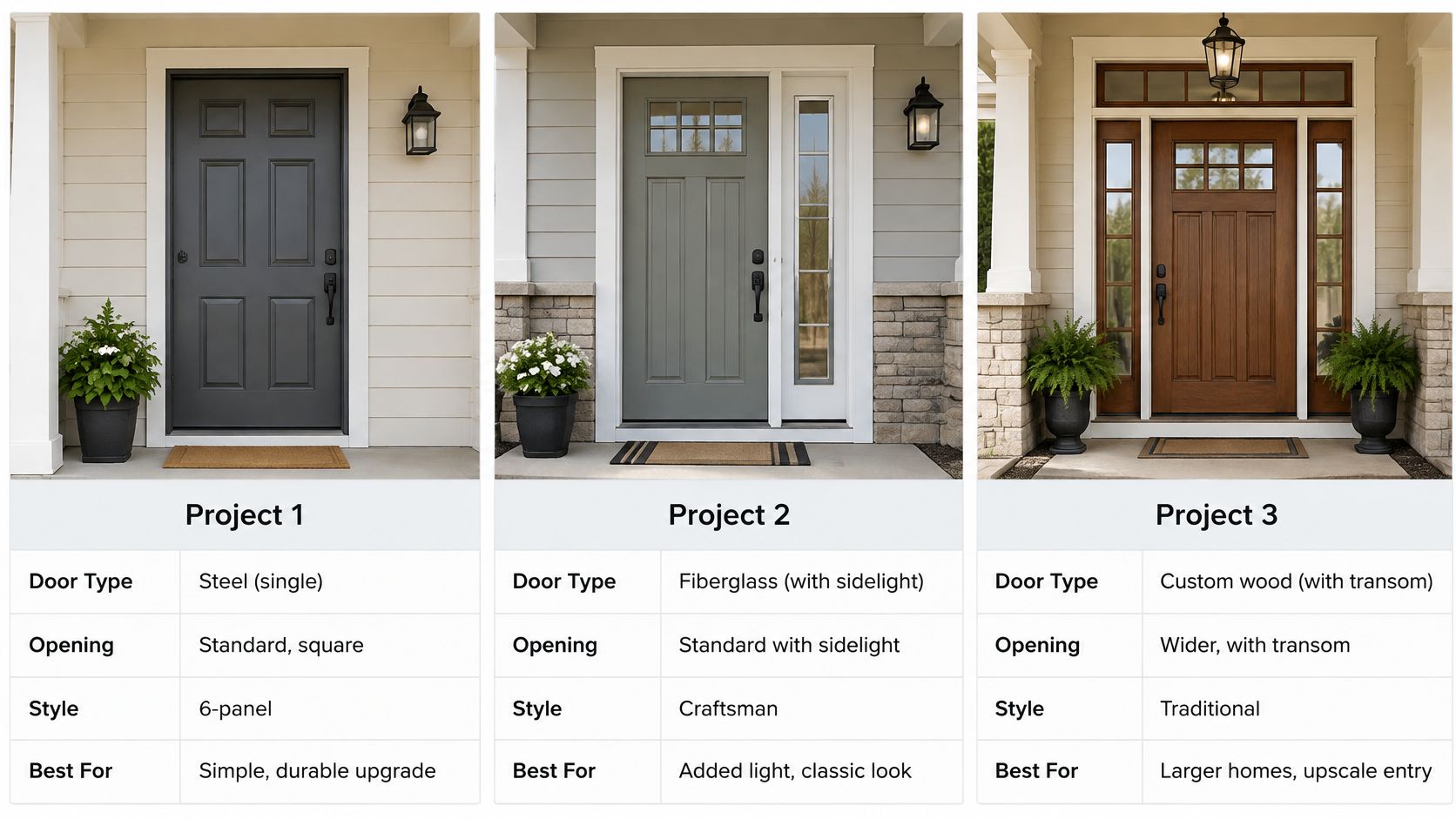
Say the first house has a standard steel single door in a sound, square opening. The scope is a prehung unit, basic hardware, and removal and disposal, with no reframing. That is the job behind a national average near $1,800, inside a typical band of about $1,000 to $3,500. The clue that kicks it up a row is soft wood at the threshold, an out-of-square jamb, or a size change.
The second house wants a fiberglass door with a modest glass lite, new weatherseals, and a factory finish, still in a usable frame. The owner faces strong sun and doesn't want to repaint wood every few years. Expect the middle of the $1,300 to $5,800 fiberglass band, not the steel floor. The jump comes if they keep or add sidelights, a transom, or premium hardware.
The third house is the custom jump: wood or a glass-heavy unit, a double door or sidelights, a custom size, and a rotted sill. The product already starts at $1,900 and often clears $6,000 once the assembly is oversized or sidelighted. Rebuilding the frame can add another 40% to 60% on top of a door-only price. The site clue is the same soft sill, plus any sidelight the owner wants to keep.
| Project | What is included | Typical place in the ranges | What makes it jump |
|---|---|---|---|
| Steel swap, sound opening | Prehung steel unit, basic hardware, removal | Near the $1,800 average, inside $1,000–$3,500 | Rot, out-of-square jamb, or a size change |
| Fiberglass with modest glass | Fiberglass slab or prehung unit, low-E or decorative lite, new seals, factory finish | Middle of the $1,300–$5,800 fiberglass band | Sidelights, transom, or premium hardware |
| Custom wood or glass-heavy entry | Wood or large glazing, double door or sidelights, custom size, finish work | From $1,900 and often past $6,000 | Frame rebuild, which can add 40–60% over door-only work |
A short walkthrough of how an opening is measured and set helps you see which of those three jobs you have.
Resale Return Versus Energy Savings
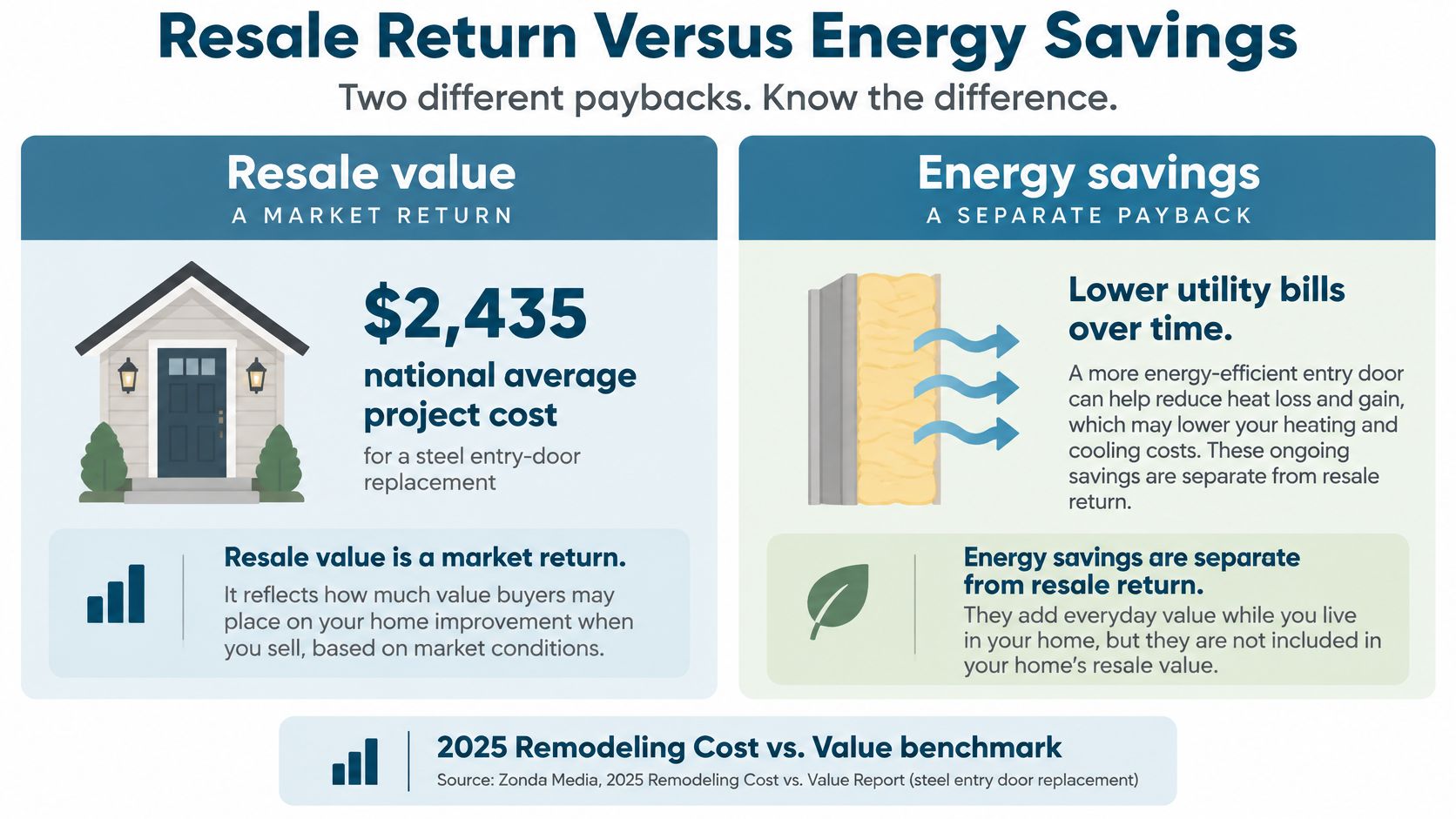
People mix two paybacks. ASP Superhome's write-up of the 2025 Remodeling Cost vs. Value benchmark estimates a national average project cost of $2,435 for a steel entry-door replacement and a resale-value increase of $5,270, a reported 216% return. In dollar terms, the estimated value recapture exceeds project cost by $2,835. That is a remodeling-resale benchmark, not cash in hand, and not the energy payback of the door. Results move with market, workmanship, design, and the condition of the house.
Exterior replacements have often ranked among the stronger cost-recovery projects because a door also carries security, weather protection, curb appeal, and the first impression at the threshold. Broader resale sequencing, including which projects buyers notice first, is covered in Edinhart Realty and Property Management resale tips. Steel is the benchmark's lower-cost case. Fiberglass and wood cost more once decorative glass, premium finishes, sidelights, custom sizes, or a full-frame replacement enter the scope, so they should not be judged against that steel 216% figure. A side-by-side on wood versus fiberglass front doors is a product decision, not a resale percentage.
Comfort is not a utility-bill promise
No verified energy-savings dollar figure is available for this door, so don't budget a monthly credit you can't document. What you can count on is comfort. A door that sits true and is weatherstripped stops the draft and the rain line at the floor. A poor install wastes a well-rated unit through a crooked latch, worn seals, and a threshold that leaks air. Damaged, rotted, or out-of-square frames may need repair before the new unit can perform.
Resale value is a market return on a defined steel project. It is not a rebate, and it is not a power-bill forecast.
For a Texas home, weigh the installed price against both resale and fewer callbacks from heat, sun, and storms. Don't compare a custom opening with the national steel benchmark.
Get a Line Item Quote for Your Opening
Upgrade Worth treats installation quality as a cost variable: the unit must be plumb, level, and square so the latch engages, weatherstripping compresses evenly, and the threshold sheds water without an air leak. Poor alignment causes drafts, premature seal wear, and callbacks even when the door's lab ratings look strong. Separate line items show whether a low number omitted scope.
Send this list to any installer and ask for a price on each line:
- Door system, including material, size, and any glass.
- Frame or prehung unit, and whether the old frame stays.
- Hardware, named by model, not "standard lock."
- Threshold and weatherseal package.
- Removal and disposal.
- Rough-opening repair, with an allowance if rot is possible.
- Exterior flashing or sealant, including a sill pan.
- Interior and exterior trim.
- Painting or factory finish.
- Permits, if the jurisdiction requires them.
- Warranty terms for product and labor, in writing.
Before you request quotes, state four facts: keep or replace the frame, any size change, sidelights or a transom, and known water damage. Ask the installer to confirm the set is plumb, level, and square, with the latch, weatherstripping, and threshold checked. If the opening is complicated enough that you want a third-party takeoff, construction estimator pricing from HireArchitects shows what a separate estimating service costs, which is not the same as a door company's installed quote.
Photograph the sill and the gaps. Measure the rough opening if it is safe to do so. Request one quote that names every line before you compare it with a slab-only price. Homeowners and builders in Texas can ask a supplier such as Breaking Glass Co. to price fiberglass entry doors with installation in the scope. Confirm service area, warranty, and quote terms directly before you rely on any figure.
Breaking Glass Co. supplies and installs fiberglass entry doors for replacement openings, including measurement and a written installed quote that can separate the door, the frame, and the repair work. If you are pricing a Texas entry and want the opening, not just the slab, on the estimate, visit Breaking Glass Co. and ask for a line-item quote on your door.