Most wood vs fiberglass front door comparisons give homeowners the wrong starting point. They treat the decision as a simple choice between natural beauty and modern practicality, then stop at the purchase price. In Texas, that approach misses the costs that determine whether an entry door still looks good and closes properly after years of heat, ultraviolet exposure, humidity, storms, and daily use.
The better question is this: Which door will cost less to own, maintain, and replace in your specific Texas setting? Fiberglass usually wins that calculation because it resists moisture movement and provides substantially stronger insulation than wood. Wood still has a legitimate place, but it's a narrower choice tied to architectural authenticity, custom craftsmanship, and a homeowner's willingness to maintain the material.
Table of Contents
- Why the Wood vs Fiberglass Question Is Usually Framed Wrong
- How Wood and Fiberglass Entry Doors Are Actually Built
- Durability, Energy, Security, and Lifespan Compared
- Maintenance and Refinishing Demands in Texas Climates
- Upfront Price, Lifetime Cost, and Replacement Timing
- Best Use Cases for Homeowners and Builders
- Which Door Should You Actually Buy
Why the Wood vs Fiberglass Question Is Usually Framed Wrong
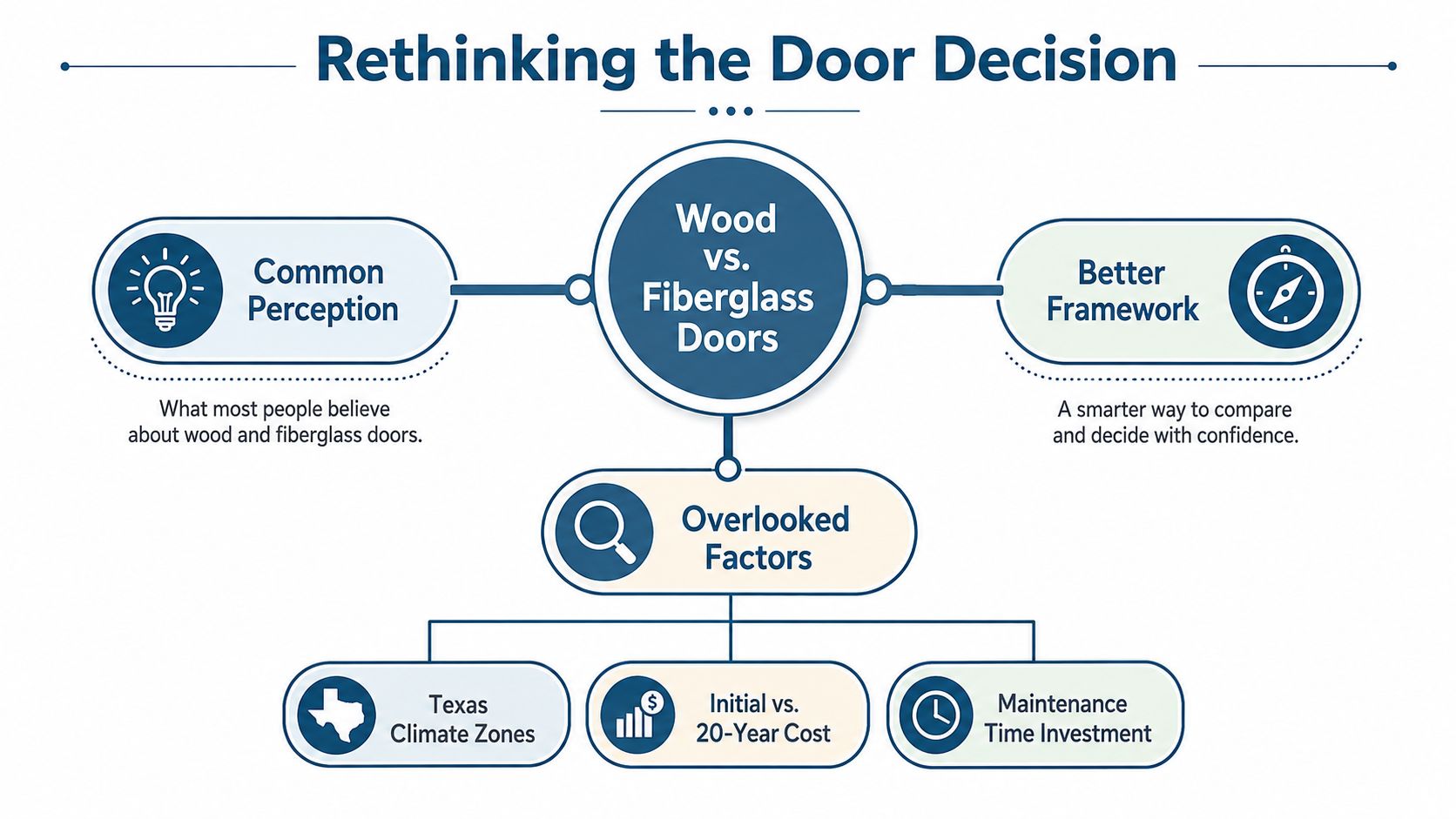
The usual advice says wood and fiberglass are both good, so choose the door that looks better. That is weak guidance for Texas. A front entry faces intense sun, high heat, humidity swings, wind-driven rain, and occasional hail. Those conditions create very different ownership costs for the two materials.
Judge the door by total cost of ownership, not the sticker price. Wood responds to moisture and temperature, so it can swell, shrink, warp, or bow as conditions change. Its protective finish also demands regular attention. Fiberglass does not absorb moisture, making it much less vulnerable to those movement problems. Consumer guidance describes fiberglass as resistant to weather-related warping, cracking, and rusting, with general resistance to dents, as summarized by Pinnacle Home Improvements' fiberglass and wood door comparison.
A cheaper wood door can become the more expensive choice after repeated sanding, sealing, staining, or painting. Fiberglass may require more money upfront, yet its lower maintenance burden can reduce ownership costs over time. That advantage matters most at an entrance exposed to direct afternoon sun or located in a humid, unprotected area.
Texas changes the calculation
Exposure should drive the recommendation. A shaded, protected entry in a drier area gives wood a better chance than an uncovered south- or west-facing doorway. Coastal and East Texas homes face greater moisture pressure. A Hill Country renovation may reasonably prioritize architectural authenticity over insulation. Decide based on the site, the design, and how long you plan to own the home.
Thermal performance strengthens the fiberglass case. Industry and DOE-cited guidance commonly places insulated fiberglass entry doors around R-5.6 to R-7.1, while most wood entry doors sit around R-2 to R-3, according to this fiberglass and wood door performance comparison. Fiberglass can therefore provide roughly two to three times the insulation performance of typical wood. The same source states that a 1.5-inch fiberglass door without a window can provide more than five times the insulating value of a same-size solid wood door.
Texas rule of thumb: Specify fiberglass first for an exposed entrance where low maintenance matters. Choose wood when the material itself justifies the added upkeep.
Wood earns that choice in a historic restoration, a highly detailed custom entry, or a design centered on authentic grain and joinery. Those are strong reasons. A basic price comparison is not.
How Wood and Fiberglass Entry Doors Are Actually Built
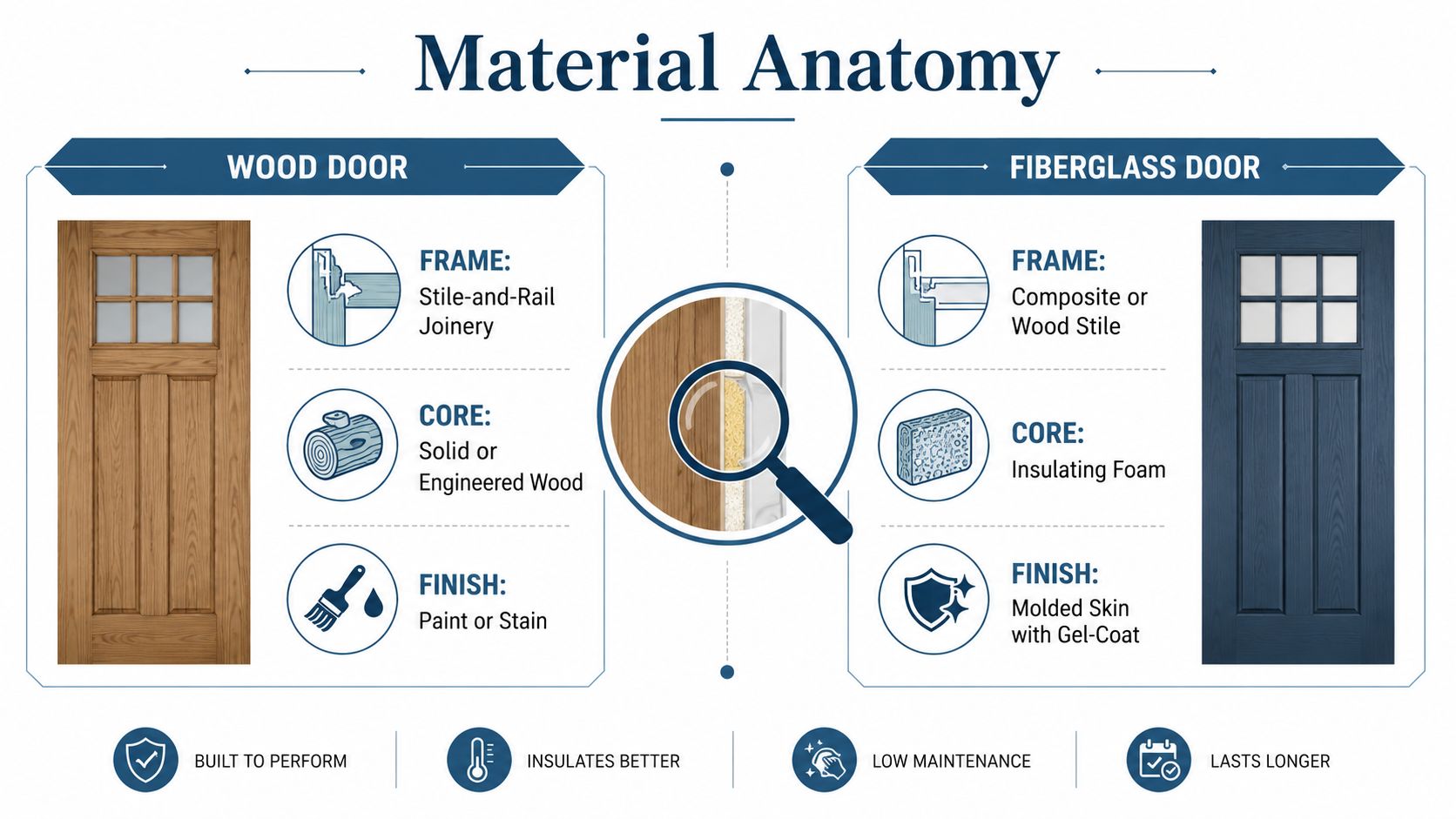
A wood door starts with wood components that are joined to create the slab. Traditional stile-and-rail construction uses vertical stiles, horizontal rails, and panels fitted into the frame. The slab may use solid hardwood, engineered wood, or a combination of both, with glass, raised panels, carvings, and applied moldings added according to the design.
Species influence how the door behaves, but no wood species eliminates maintenance. Mahogany, oak, and knotty alder offer different grain patterns, hardness, color, and workability. Engineered construction can improve consistency compared with a single solid piece, yet the door still contains natural fibers that respond to moisture and temperature.
Fiberglass doors take a different approach. Manufacturers form a durable exterior skin over an insulating core, commonly using foam for the center and composite, LVL, or wood components at the edges and hardware zones. The exterior surface can be smooth or embossed with a wood-grain pattern. Higher-quality textures are molded to reproduce the visual depth of real grain rather than applying a flat printed pattern.
Why the skin and core matter
The fiberglass skin provides the weather-facing surface, while the foam core supports insulation. Because fiberglass doesn't absorb moisture like wood, the slab is less likely to move through repeated humidity cycles. That stability helps reduce sticking, uneven reveals, and stress on weatherstripping.
The frame still matters. A premium fiberglass door should have strong lock-side reinforcement, solid hinge attachment, properly supported edges, and careful sealing at the perimeter. A weak frame can undermine an otherwise capable slab. Ask about the core, edge construction, hardware reinforcement, finish system, and sill package instead of judging quality from the grain pattern alone.
Wood offers design advantages that fiberglass can't completely duplicate. A craftsperson can shape, carve, repair, and refinish natural wood in ways that produce genuine variation. Fiberglass offers more predictable performance and can reproduce convincing wood textures, but it remains a manufactured surface.
For homeowners comparing high-quality fiberglass entry doors, the useful question isn't whether the door has a wood look. It's whether the construction supports the climate, hardware, glass package, and finish you need.
Durability, Energy, Security, and Lifespan Compared
For an exposed Texas entrance, fiberglass usually wins on total ownership cost, even when its sticker price is higher. Heat, humidity, ultraviolet exposure, and seasonal moisture cycles punish a wood door that lacks consistent protection. Wood remains the right choice when authentic material, repairability, or architectural character matters enough to justify ongoing care.
The table separates the practical trade-offs. Installation quality, overhang, glass area, hardware, finish, and manufacturer specifications still affect the result.
Wood vs Fiberglass Front Door Performance Comparison
| Criterion | Wood Door | Fiberglass Door |
|---|---|---|
| Moisture response | Absorbs moisture and can swell, shrink, warp, or bow | Does not absorb moisture and is far less prone to moisture-related movement |
| Thermal resistance | Provides lower thermal resistance than insulated fiberglass in typical entry-door construction | Insulated fiberglass usually provides the stronger thermal barrier |
| Sun and weather exposure | Finish and fibers remain vulnerable to humidity and ultraviolet exposure | Better resists weather-related warping, cracking, and rusting |
| Dent and impact resistance | Can split, dent, or show surface damage depending on species and construction | Generally resists dents, though severe impacts can damage the skin |
| Maintenance | Requires periodic sealing, staining, painting, or refinishing | Usually needs cleaning, seal inspection, and occasional finish attention |
| Security | Strong when properly built, with hardware reinforcement in the slab and frame | Strong when built with reinforced lock and hinge zones, and compatible with modern locking upgrades |
| Design | Authentic grain, carving, joinery, and repairability | Molded grain, smooth finishes, paint or stain options, and consistent sizing |
| Ownership life | Can last for decades when maintained, but weather exposure can shorten service life | Can last for many decades with much less maintenance |
Security depends on the whole assembly
Door material alone does not secure an entry. The frame, strike area, hinges, multipoint hardware, deadbolt installation, glass placement, and surrounding wall all affect performance. Specify reinforced lock-side construction and proper fasteners. Have the installer verify that the strike and hinges connect securely to the framing.
Fiberglass also gives most Texas homeowners a stronger energy and durability profile. Its insulated core helps limit heat transfer, while its moisture resistance reduces movement that can affect alignment and weatherstripping. That combination can reduce service calls and refinishing work over the door's ownership life.
Wood earns its premium when the entry is architecturally prominent, shaded by a reliable overhang, or protected from direct weather. Choose it when genuine grain, custom carving, traditional joinery, or the ability to repair and refinish the material outweighs the maintenance burden. A neglected wood door is a poor value in Texas. A well-designed, protected wood entry can be a deliberate design investment.
For most homeowners, buy fiberglass and spend the savings on a better frame, sill, lock reinforcement, and professional installation. Choose wood only with a realistic maintenance plan and a location that gives the material a fair chance to perform.
Maintenance and Refinishing Demands in Texas Climates

Watch the warning signs first. Dull or chalky finish means the protective coating is breaking down. Open joints or checking can indicate movement or moisture exposure. Sticking or uneven gaps point to slab, frame, hinge, or weatherstrip movement. A darkened bottom edge suggests moisture may already be affecting the wood. Address these conditions before minor finish wear becomes a repair or replacement project.
Texas exposure determines how quickly these problems appear. South- and west-facing entries take more heat and ultraviolet exposure. Gulf humidity, wet seasons in East Texas, and repeated moisture at the sill place extra stress on wood finishes. A dependable overhang helps, but it does not remove the need for inspection.
For wood, check the finish, sill, weatherstripping, hinges, and threshold. Clean the surface gently, then look for dull areas, exposed wood, peeling, or cracking. Sanding, sealing, painting, and restaining demand careful preparation, especially around glass openings, raised panels, and transparent stains. Repair small failures while the slab remains sound. Waiting for visible warping or extensive checking raises the labor involved.
Fiberglass needs a simpler routine. Wash it with mild soap and water, dry it thoroughly, and inspect the weatherstrip and seals. Check the skin for dents, scratches, fading, or cracks. An exposed fiberglass door still needs attention, but its maintenance usually does not involve the recurring sanding and sealing required by wood.
Changing the color or repairing a worn coating requires compatible products and proper surface preparation. Follow the manufacturer's coating instructions, and use this guide to painting a fiberglass entry door for practical preparation guidance.
If a wood finish has failed while the slab remains structurally sound, hire a refinishing specialist instead of replacing the entire door. Restore My Kitchen ATX door services provides front-door refinishing support in the Austin area.
A short visual explanation can also help you spot common upkeep issues:
Upfront Price, Lifetime Cost, and Replacement Timing
The cheaper door at the showroom isn't automatically the cheaper door to own. A wood slab may appear attractive when the comparison only includes purchase and installation, but the ownership bill also includes finish materials, labor, inspections, weatherstripping, repairs, and eventual replacement.
Fiberglass usually asks for more attention to specification at the beginning. You're paying for the insulated core, exterior skin, reinforcement, finish system, glass package, sill, and installation quality. That higher initial commitment can make sense when the door faces direct Texas sun or a humid, exposed entry.
Wood vs Fiberglass Front Door 25-Year Ownership Cost
| Cost Factor | Wood Door | Fiberglass Door |
|---|---|---|
| Initial purchase | Can range from simpler construction to highly customized hardwood work | Varies with skin, core, glass, hardware, finish, and frame package |
| Finish maintenance | Repeated sanding, sealing, staining, or painting can be required | Usually limited to cleaning, inspection, and selective touch-up |
| Weather-related repairs | May include adjustment, edge repair, finish restoration, or replacement of moisture-damaged components | More often involves repair of localized surface or hardware damage |
| Labor demand | Higher DIY skill and contractor involvement for refinishing | Lower routine labor burden, though installation still needs professional care |
| Replacement timing | Depends heavily on exposure and maintenance consistency | Often provides a longer service window with less maintenance |
| Long-term value | Makes financial sense when authentic wood is the primary design objective | Usually the stronger ownership choice for exposed Texas entries |
The verified consumer guidance cited by Angi notes that wood doors often need yearly sanding, touch-ups, or refinishing, while fiberglass can last up to about 70 years with much less maintenance. The same source also reports a fiberglass door market valued at USD 23.7 billion in 2025, projected to reach USD 44.5 billion by 2035. That projection indicates growing interest in lower-maintenance, longer-life products, but it doesn't replace a project-specific estimate.
Know when the door is reaching the end
Replace wood when the core shows persistent checking, rot, severe warping, or repeated finish failure that no longer responds to refinishing. Replace fiberglass when the skin has extensive cracking, deep impact damage, serious yellowing or crazing, or when the frame and hardware can't maintain a reliable seal.
A short-term flip can justify a lower initial commitment if the door only needs to present well for a limited ownership period. A historic restoration can justify wood because the authentic material may be part of the project requirement. For a long-term Texas homeowner, fiberglass generally offers the more predictable cost per year of service.
Best Use Cases for Homeowners and Builders
A material decision gets easier when you attach it to a real project instead of debating it in the abstract.
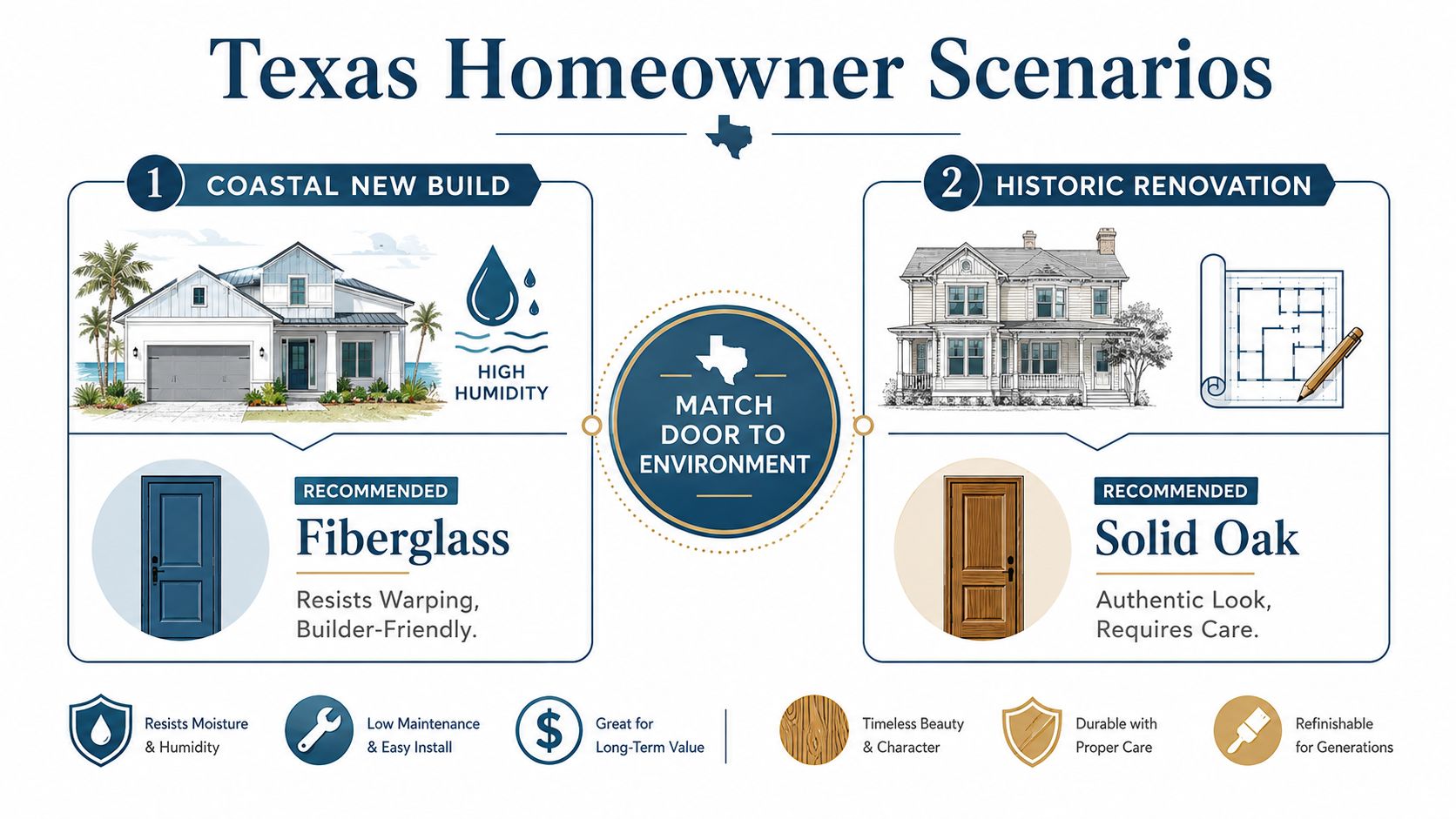
An East Texas new build usually favors fiberglass. Humidity, rain, construction schedules, and warranty expectations make a stable, lower-maintenance slab easier to standardize across homes. Builders also benefit when the door is less likely to produce callbacks related to swelling, sticking, or finish deterioration.
A coastal home points even more strongly toward fiberglass. The door needs resistance to moisture and weather exposure, and homeowners usually don't want a recurring refinishing project attached to the main entrance. Fiberglass is the clear winner for an uncovered or heavily exposed coastal opening.
Where wood earns its place
A Hill Country custom home may be different. If the entry is a major architectural feature, the owner may want genuine mahogany, oak, or knotty alder with a stain that highlights natural variation. With a substantial overhang, careful sealing, and a homeowner who accepts regular upkeep, wood can be the right design decision.
Historic districts create another exception. Preservation requirements, existing trim profiles, and the visual character of the original home may favor real wood, sometimes decisively. In that situation, wood wins because authenticity outranks low maintenance.
Short-term investors should evaluate the project's resale strategy. Fiberglass provides a consistent appearance and reduces the chance of maintenance issues before sale. Wood may make sense when the neighborhood and buyer profile place a premium on custom craftsmanship, but the investor shouldn't assume the higher maintenance burden will automatically return more value.
For builders, the practical handoff is simple:
- Standardized production homes: Fiberglass reduces variation and simplifies finish expectations.
- Custom luxury construction: Wood works when its grain, joinery, and detailing are part of the design brief.
- Exposed entrances: Fiberglass is the safer performance specification.
- Protected historic entries: Wood can preserve the intended architectural character.
- Replacement projects: Match the material to the existing frame, exposure, and owner's maintenance tolerance.
For homeowners comparing installation scope and replacement options, this front door replacement resource can help organize the questions to ask about measurement, framing, hardware, and warranty coverage.
Which Door Should You Actually Buy
For most Texas homeowners, buy fiberglass. It delivers substantially higher thermal resistance, resists moisture-related movement, and usually demands less ongoing maintenance than wood. Those advantages matter more than a modest difference in sticker price when the entry faces Texas heat, humidity, ultraviolet exposure, or wind-driven rain.
Choose wood only when the material is central to the project. That includes a historic home with architectural requirements, a custom mahogany or walnut entry where natural grain is the design feature, or a protected entrance owned by someone who wants to maintain real wood. Wood can also make sense in a cooler, drier climate where moisture stress is less severe, though that isn't the Texas default.
Use this quick checklist:
- Exposure: Is the door uncovered or exposed to afternoon sun and rain?
- Climate: Does the home face substantial heat, humidity, or coastal moisture?
- Ownership horizon: Are you planning to stay long enough for maintenance costs to matter?
- Maintenance tolerance: Will you sand, seal, stain, or repaint when required?
- Design priority: Is authentic wood required, or will a high-quality molded grain satisfy the goal?
- Performance needs: Do insulation, stable operation, and weather resistance rank above material authenticity?
- Project type: Is this a standard replacement, new build, historic restoration, or custom architectural statement?
If most answers point toward exposure, longevity, and low upkeep, fiberglass is the clear choice. If the door itself is an architectural artifact, choose wood and budget for its care.
Breaking Glass Co. supplies and installs fiberglass entry doors for Texas homeowners, builders, and contractors, with measurement, ordering, installation, warranty support, and nationwide product shipping available. Visit Breaking Glass Co. to request a quote and compare a fiberglass door package against the long-term maintenance demands of wood.