
You're probably standing in your entryway with two competing goals. You want the wide panels, divided-lite glass, and warm wood character of a classic Craftsman door, but you also know what Texas weather does to exposed materials. Sun, humidity, wind-driven rain, and rapid temperature changes can turn a beautiful wood door into a maintenance project.
That's why the fiberglass Craftsman exterior door has become such a practical choice for Texas homes. It can reproduce the texture and proportion homeowners want from wood while offering the dimensional stability and insulation associated with modern exterior-door construction. The important qualification is that the door still needs the right finish, glass, seals, and installation. Fiberglass solves many material problems, but it can't correct a poorly prepared opening.
Table of Contents
- Why Fiberglass Fits Texas Homes
- What Is a Fiberglass Craftsman Exterior Door
- Durability and Weather Resistance
- Fiberglass vs. Wood and Steel Doors
- Styles Finishes and Energy Efficiency
- Installation Warranty and Next Steps
Why Fiberglass Fits Texas Homes
A common project starts with a homeowner showing us a photograph of a traditional Craftsman entry door. The request is usually straightforward: “I want this look, but I don't want to sand, stain, and repair it every few years.” In East Texas, that concern is reasonable. A front door sits directly in the weather, and a dark finish can absorb substantial solar heat while humidity and rain test every joint and seal.
Wood still has an unmistakable feel. Its grain is naturally irregular, and a carefully made solid-wood door can be an excellent architectural choice. The trouble begins when the door's appearance depends on frequent refinishing and its operation depends on the slab staying perfectly stable. Steel offers strength and a clean painted surface, but it usually doesn't deliver the same convincing wood character without a compromise in texture or proportion.

The Texas-specific advantage
Fiberglass uses a durable outer skin over an insulated core, so the door can provide a wood-inspired appearance without depending on a moisture-sensitive slab. Technical coverage notes that fiberglass resists the warping, rotting, shrinking, and swelling associated with wood, and that its non-porous skin helps limit moisture uptake and preserve contact with weatherstripping in this comparison of fiberglass and wood doors.
That matters at the threshold. If the slab moves, the latch can stop lining up, the weatherstrip can compress unevenly, and air or water can find a path around the perimeter. A stable slab gives the installer a better chance of maintaining a consistent seal through hot days and humid nights.
Where the Craftsman look comes from
Craftsman style isn't tied to one material. It comes from visual decisions such as substantial rectangular panels, divided-lite glass, wide stiles, simple hardware, and a finish that complements stone, brick, siding, or stained trim. A fiberglass door can carry those details while giving the homeowner more latitude in a demanding climate.
For a clean, understated entry, compare the proportions and panel options available in a flush fiberglass door design. The right profile can preserve the home's architectural character without making the entry look overly ornate.
What Is a Fiberglass Craftsman Exterior Door
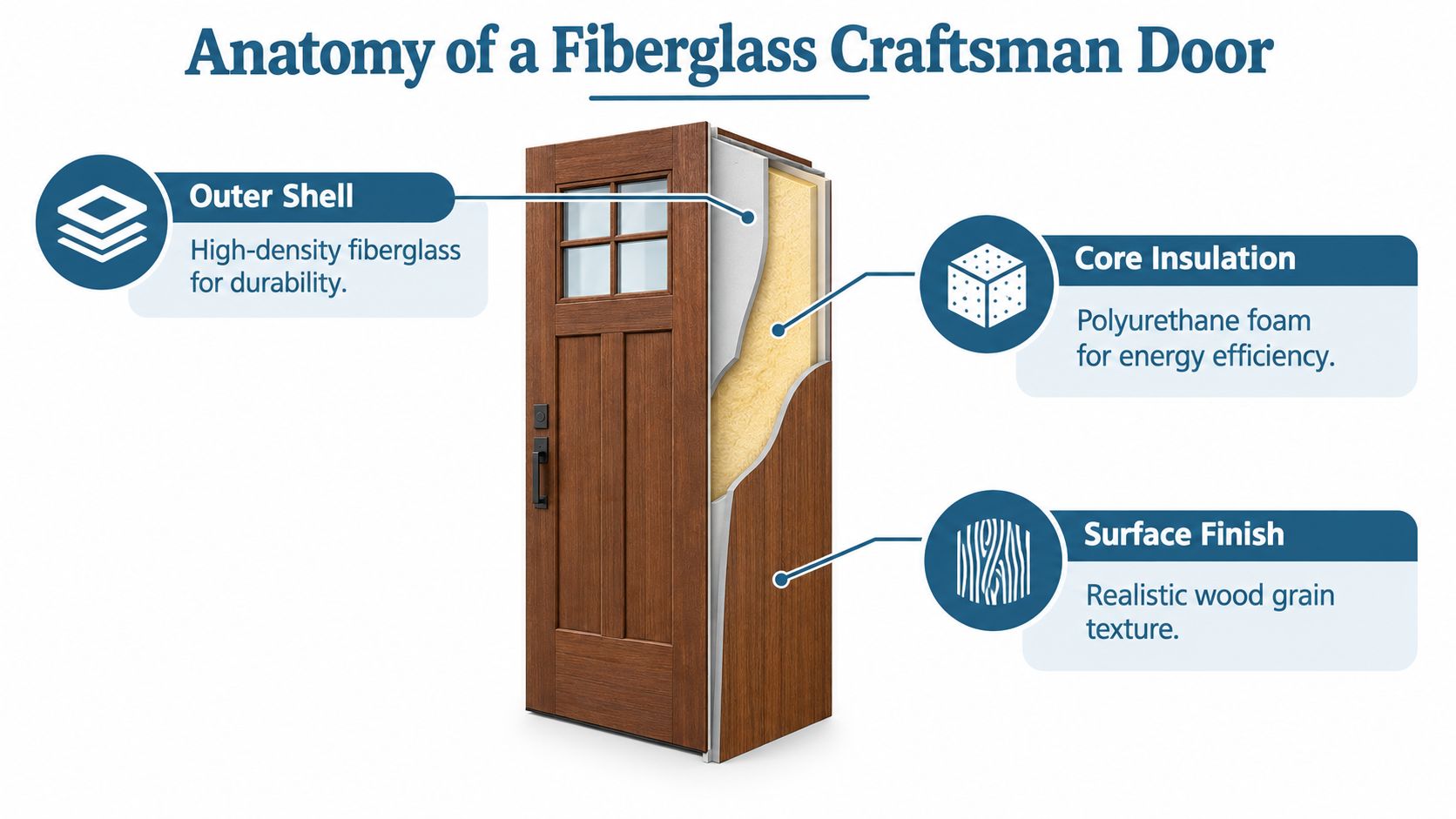
A fiberglass Craftsman exterior door is a full entry system built to suit the style and the climate, not just a slab with a grain pattern. The visible face usually includes a molded fiberglass skin, an insulated core, glass if the design calls for it, plus the frame, sill, and weather-sealing that determine how well the door works.
Start with the outer skin
The outer fiberglass skin creates the finished look you see from the curb. Manufacturers mold wood grain into that surface, then finish it with paint or stain systems meant to read like timber without relying on timber itself.
That matters in Texas. A well-made fiberglass surface holds its appearance better than a moisture-sensitive wood slab, especially where sun, humidity, and sudden weather swings can punish an entry that is not sealed and maintained carefully. I tell homeowners to inspect samples in daylight, especially if they want a stained finish. The grain should look deliberate and consistent across the panels and stiles, not flat or printed.
Understand the insulated core
Inside the skin, many fiberglass entry doors use polyurethane foam. That core helps the slab stay rigid and slows heat flow through the door assembly.
A technical industry report notes whole-door U-factors as low as 0.15 for premium fiberglass doors with polyurethane cores, compared with an IECC entry-door threshold of 0.30 or lower in most climate zones as reported in this fiberglass market analysis. The point is not that every fiberglass door performs at that level, because it does not. Ask for the tested rating on the exact model and configuration you plan to install.
Identify the Craftsman details
The Craftsman look comes from proportion and restraint. On a fiberglass door, that usually shows up through:
- Divided-lite glass: Small panes or simulated divided lites bring in daylight and keep the entry in line with the style.
- Panel geometry: Raised or recessed rectangular panels give the door visual weight without ornate trim.
- Broad framing: Wider stiles and rails help the entry fit bungalow, ranch, and traditional Texas homes.
- Wood-inspired finish: Oak, fir, mahogany, and similar grain effects can soften brick, stone, or painted siding.
For a useful architectural reference, RBA Home Plans' Craftsman guide helps when matching the door to rooflines, porches, trim, and other details that define the style. The goal is a door that looks like part of the house, not a separate product dropped in at the end.
Durability and Weather Resistance
A Craftsman door can look right on a Texas home and still fail at the perimeter if the material and installation do not suit the climate. East Texas humidity and driving rain test the seal, while unfiltered sun can fade finishes and accelerate movement in materials that react to heat and moisture. The slab, frame, sill, glass, and installation must function as one assembly.
Fiberglass addresses much of the material-related risk. It resists warping, rot, shrinkage, swelling, moisture, salt solutions, and contaminants that can accelerate deterioration in wet or coastal conditions in this explanation of fiberglass door behavior. Its relatively non-porous skin absorbs less moisture, helping the slab hold its shape as Texas conditions change. That stability is why fiberglass is the most dependable way to keep Craftsman proportions and wood-grain character without accepting the same exposure-related movement as real wood.
What stability protects
A door that holds its dimensions supports the components responsible for daily operation:
- Weatherstripping: Consistent contact helps limit gaps along the closing edge.
- Lock alignment: A stable slab keeps the latch and deadbolt lined up with the strike.
- Hinges and fasteners: Less movement reduces stress on hardware and the frame.
- Finish quality: Reduced swelling and shrinking lowers the risk of cracks and splits that expose vulnerable areas.
Practical rule: Treat the door, frame, sill, and perimeter seal as one weather-management system. Even a well-built fiberglass slab can leak when the rough opening or threshold is installed poorly.
Fiberglass also has limits. It handles normal exterior-door impacts well, but no residential door is immune to storm debris or severe impact. Frame construction, glass selection, hinges, lockset, and anchoring all affect the result. In storm-exposed areas, specify those components together rather than judging performance by the door skin alone.
Exterior finishes across a property face the same sun and heat. For turf installation by Modern Yard Landscapes, long-term color and surface performance also depend on sustained Texas exposure. Ask for the manufacturer's finish-care instructions, then confirm that the installer has accounted for your entry's sun, rain, drainage, and porch protection.
Fiberglass vs. Wood and Steel Doors
Texas homeowners often want a Craftsman entry with the warmth of wood and the day-to-day stability of a modern exterior door. Those goals can conflict. Wood provides genuine grain, weight, and character, while steel offers a rigid painted surface and a familiar price point. Fiberglass is the practical material that reliably combines Craftsman appearance with better tolerance for Texas heat, humidity, sun, and changing weather.
The deciding issue is maintenance and exposure. A shaded entry beneath a deep porch can make wood a reasonable choice for a homeowner willing to inspect and refinish it. A west-facing door with little shade gives fiberglass a clear advantage because it leaves more room for missed maintenance without sacrificing the panel design.
Material Comparison Fiberglass Wood and Steel
| Feature | Fiberglass | Wood | Steel |
|---|---|---|---|
| Appearance | Can reproduce wood grain and Craftsman panel profiles | Naturally authentic grain and weight | Usually best suited to painted finishes |
| Moisture response | Resists warping, rot, swelling, and shrinkage | Can absorb moisture and move if protection fails | Can resist weather well, but exposed damage may create corrosion concerns |
| Insulation | Foam-core models can deliver strong whole-door performance | Insulation varies by construction and thickness | Insulated steel doors can perform well |
| Maintenance | Usually limited to finish and hardware care | Requires more consistent sealing, staining, or painting | Painted surfaces need inspection and touch-up |
| Texas fit | Strong balance for heat, humidity, and changing conditions | Attractive but maintenance-sensitive | Durable, though less convincing for a wood-look Craftsman design |
| Main drawback | Finish and installation quality still matter | Higher upkeep and dimensional movement | Can dent, feel less substantial, or lack natural-looking texture |
Available comparison material places insulated fiberglass and insulated steel doors commonly around R-5 to R-7, while wood is often around R-2 to R-3 for the exterior-door materials discussed in humid climates. These are general ranges, not the tested rating of every door. Glass, frame construction, weatherstripping, sill design, and installation determine how the complete unit performs in a Texas home.
Where wood still makes sense
Choose wood for its authentic material character, not with the expectation that it will behave like fiberglass in a wet climate. It can suit a carefully sheltered entry, a historic renovation, or a project where natural grain matters more than maintenance convenience.
Plan to inspect the finish, seal exposed surfaces, and watch the panels and edges for movement. Sun, rain, and humidity can turn small finish failures into swelling or sticking. If regular upkeep is unrealistic, the door's initial appeal may become a recurring problem.
Where steel earns consideration
Steel makes sense when a painted, durable door with a straightforward appearance fits the design. It can work well for a service entrance or another location where a wood-look surface is not important. The trade-off is that dents may be difficult to conceal, and any breach in the protective coating needs prompt attention to limit corrosion.
Craftsman proportions, panel depth, and glass layout still matter with steel, but the material rarely delivers the natural-looking texture homeowners want at a front entry. Fiberglass gives installers more flexibility to match the home's character while handling Texas exposure.
For a homeowner-focused comparison of the two materials, review this wood versus fiberglass front door comparison. Fiberglass does not win every category, but it usually provides the most balanced route between Craftsman character, energy performance, and practical ownership in Texas.
Styles Finishes and Energy Efficiency
A south-facing entry in a Texas home can look perfect in the showroom and still disappoint after months of direct sun. The finish may fade, the glass may make the foyer uncomfortably bright, and a poorly specified frame can waste the efficiency the door promised. Choose the appearance and the complete door assembly together.
Match the finish to the exposure
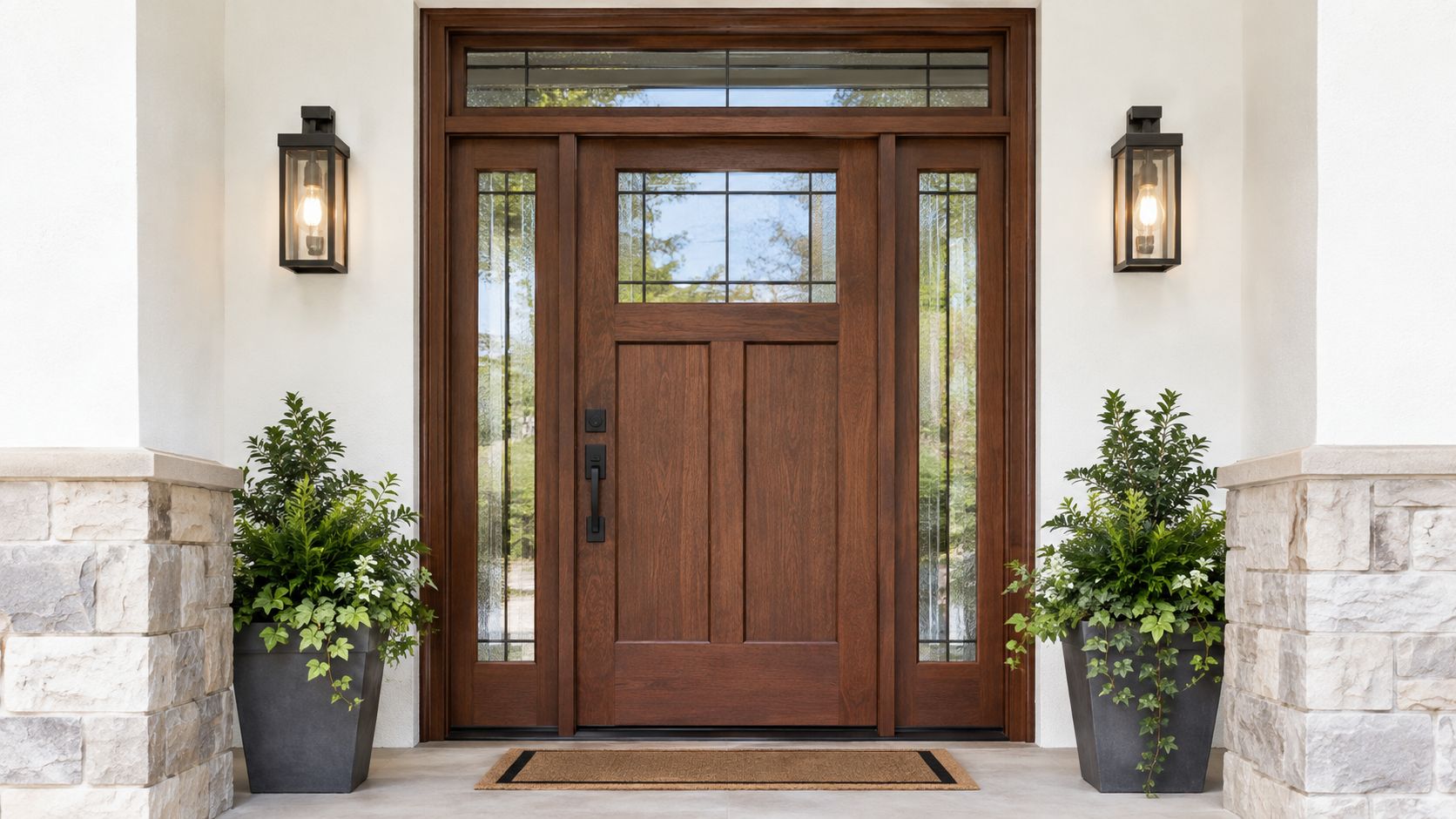
Stained wood-look fiberglass suits stone, brick, cedar accents, and earth-tone siding. Dark stains create contrast against a pale exterior, while oak or fir tones usually give the entry a more relaxed appearance. Painted finishes work better when the door needs to coordinate with shutters, trim, or a strong accent color.
Texas exposure should guide the finish choice. For an entry that receives intense afternoon sun, select an exterior-approved finish system and follow the manufacturer's maintenance instructions. Low maintenance still means cleaning the surface correctly, checking the edges, and repairing small finish failures before moisture reaches the door's vulnerable components.
Select glass for the room behind it
Craftsman divided-lite glass adds character and daylight, but it also affects privacy, solar gain, and security. Check the door's orientation, sightlines from the street, and the amount of light already provided by sidelights or nearby windows.
- Clear or lightly patterned glass: Brings in more daylight with less privacy.
- Privacy glass: Better for entries facing sidewalks or neighboring homes.
- Decorative divided lites: Reinforce Craftsman character with more visual detail.
- Insulated glazing: Helps support the thermal performance of the complete entry assembly.
The glass package cannot correct a leaking frame. Specify the glazing, stops, sealants, and weatherstripping as one unit, not as separate showroom upgrades.
The best-looking door is the wrong choice if its finish, glass, and exposure do not suit the actual opening.
Put the energy rating in context
Entry doors form part of the home's thermal boundary, so the frame, sill, weatherstrip, glass, and installation all affect comfort. Market reporting places fiberglass doors within a broader shift toward durable, energy-conscious exterior products in its fiberglass door market report.
Do not select a door from a general performance claim alone. Request the whole-unit rating from the manufacturer for your exact slab, glass, frame, and sill configuration. Exterior-door performance guidance also shows why the tested assembly matters according to this exterior-door performance coverage. In local installations, I pay close attention to the fit at the sill and weatherstrip because a premium door installed out of square will not perform as specified.
See how the style, construction, and installation considerations come together in this visual overview:
Installation Warranty and Next Steps
Installation determines whether the door performs like the product brochure. The crew should verify the rough opening, set the frame plumb and square, support the sill correctly, adjust the hinges, confirm latch alignment, and seal the perimeter without blocking drainage. This exterior-door installation diagram can help you understand the components before work begins.
Ask who measures the opening, who handles any framing correction, what sealants are used, and how the installer tests the finished door. The slab should close without force, the weatherstrip should contact evenly, and the lock should operate smoothly.
Breaking Glass Co. provides factory-direct products with a lifetime warranty and offers free same-day quotes for Texas residents, along with nationwide shipping, according to its published company information on the company website. Confirm the exact warranty terms, exclusions, finish coverage, and installation responsibilities before approving the order.
For a Texas home that needs Craftsman warmth without wood's moisture sensitivity, fiberglass is usually the most dependable compromise. Choose the door by its tested assembly and finish, then protect that investment with careful measurement and professional installation.
If you're replacing a worn entry door, ask Breaking Glass Co. for a same-day quote on a fiberglass Craftsman exterior door suited to your Texas home, including product, measurement, installation, and warranty details. Visit Breaking Glass Co. to review available door options and start planning an entry that looks inviting without creating unnecessary maintenance.