
The most common advice about the difference between new construction and replacement windows is too simple. People get told to choose replacement because it's cheaper, or new construction because it's “better,” and that advice misses the key question: what stage is the wall in right now? If the opening is already bare to the studs, one choice makes sense. If the wall is finished and you're trying not to tear up good siding, the other one does.
Here's the blunt version. New-construction windows belong in openings that are being rebuilt from the framing out, while replacement windows belong in existing frames that are staying put. That single difference drives the rest of the decision, cost, disruption, daylight, and how much of the original opening you keep.
| Criteria | New-Construction Windows | Replacement Windows |
|---|---|---|
| Best for | New builds, additions, major remodels | Existing homes, like-for-like upgrades |
| Installation scope | Wall opened to framing, full integration | Fits inside the existing frame |
| Exterior work | Siding, trim, and flashing work are part of the job | Less disturbance to siding and trim |
| Daylight and glass area | Preserves more of the opening | Usually reduces visible glass area |
| Cost and labor | Higher because the job is bigger | Lower because the job is simpler |
| Design flexibility | More freedom to resize or reshape openings | Usually stays within the old opening |
If you're still comparing product labels instead of project conditions, you're asking the wrong question. A smarter starting point is whether the wall is open, whether the old frame is sound, and whether you want to preserve the opening or rebuild it.
Table of Contents
- Why the Window Type You Choose Depends on Your Project Stage
- How Each Window Is Built and Installed
- Glass Area, Daylight, and Design Flexibility
- What Each Window Type Actually Costs
- The Gray Zone When the Walls Are Half Open
- Timeline, Disruption, and Installation Sequence
- Which Window Type Fits Your Project
Why the Window Type You Choose Depends on Your Project Stage
You're standing in front of a wall that's either already finished or already torn open, and the right window choice is usually obvious if you look at the stage of the project instead of the sales pitch. New-construction windows are for openings that are being rebuilt from the studs out. Replacement windows are for openings that already exist and don't need the surrounding wall disturbed.
The project stage tells you what kind of window belongs there
A new home, room addition, or major remodel with exposed framing calls for a unit that fastens into the structure itself. That's why new-construction windows are used when the wall is open to the studs and the opening, trim, and sometimes siding are being rebuilt. A finished house with a solid frame calls for a retrofit that slips inside the old opening and leaves the wall intact. A practical overview of that builder-focused logic is laid out in this guide to best vinyl new-construction windows for Texas builders.
That's the part homeowners miss when they start with price shopping. The window type doesn't just change the sticker. It changes how much of the wall gets touched, how much finish work follows, and how much of the original opening survives.
Practical rule: If the exterior wall is already being rebuilt, don't force a retrofit into it just to save a little labor.
The right choice follows the opening, not the brochure
A replacement unit is built to preserve the existing frame, which is why it's the go-to move for occupied homes and straightforward upgrades. A new-construction unit is built to join the framing more directly, which is why it makes sense when you already plan to open the wall. That's the difference between new construction and replacement windows, not quality, but fit for the job.
If you pick by name alone, you can make the wrong call in both directions. I've seen owners overpay for full tear-outs where a good retrofit would've done the job cleanly. I've also seen people cram insert windows into a remodel where the siding was already coming off, then regret not rebuilding the opening correctly.
The rest of this comes down to one simple test. Are you preserving the wall, or are you rebuilding it? Once you answer that, the window choice stops being confusing.
How Each Window Is Built and Installed

New-construction and replacement units may look similar from the street, but they're built for different jobs. One is meant to tie into exposed framing. The other is meant to sit inside an already-finished opening. That difference changes everything a crew touches on the wall.
The flange, the frame, and the opening
A new-construction window includes a nailing flange, sometimes called a fin. That flange lets the installer fasten the unit directly to the wall sheathing or framing during a build or major tear-out. In practice, that means the crew works from an exposed rough opening, checks the frame, sets the window, flashes it, and then rebuilds the exterior layers around it.
A replacement window works differently. It's made to fit inside the existing frame, so the old frame stays in place and the surrounding wall doesn't have to be opened up. That's why replacement windows are the faster, cleaner choice in a finished house. A clear installation overview appears in this replacement window install guide.
Here's the direct comparison:
| Criteria | New-Construction | Replacement |
|---|---|---|
| Fastening method | Nailing flange to framing | Set inside existing frame |
| Wall access needed | Open wall or rebuilt opening | Finished wall can stay intact |
| Exterior impact | Siding and trim work often involved | Minimal disturbance |
| Interior impact | More finish work is common | Less interior disruption |
| Best use case | New builds, additions, full tear-outs | Existing homes, simpler retrofits |
What the crew actually does on site
With new construction, the installer is part of the wall assembly. The rough opening has to be square, flashed, insulated, and tied into the exterior layers correctly. With replacement, the crew is working around what's already there, which saves time and avoids disturbing good siding or interior trim.
The product label matters less than the condition of the opening. A well-prepared opening with careful flashing beats a sloppy install of any type.
The attached video below is useful if you want to see how much the installation sequence changes once the wall is opened. The process isn't just “swap a window.” It's a different scope of work.
That's why contractors don't talk about windows in a vacuum. They talk about wall conditions, finish layers, and sequencing. The unit itself is only part of the job.
Glass Area, Daylight, and Design Flexibility
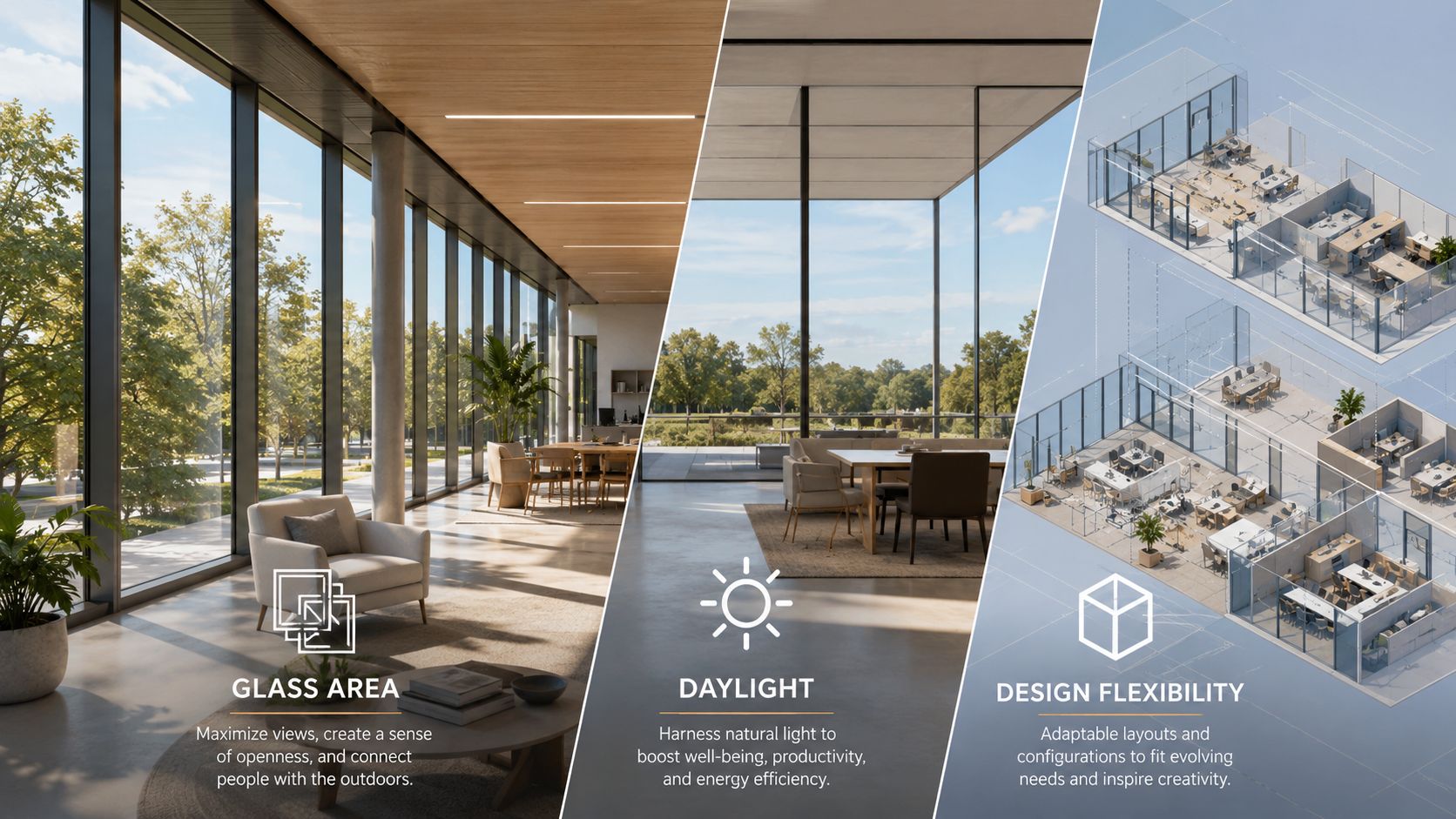
The part brochures gloss over is the visible glass. Replacement windows usually sit inside the old frame, so you give up some opening size and a bit of daylight. On older homes, that loss is easy to see, especially in rooms that already feel tight or underlit.
What you lose with an insert window
Insert windows solve one problem by accepting another. You keep the wall intact, avoid major tear-out, and leave good siding or interior trim alone, but you also inherit the size of the existing frame. If that frame is thick, damaged, or slightly out of square, the finished window can look smaller than the original opening ever did.
That trade-off is fine on a straightforward retrofit. It is the right call when the opening already works, the goal is to improve performance, and the homeowner does not want a bigger project on the wall. It is a worse choice when daylight is already limited, because every bit of lost glass shows up in the room.
What new construction buys you
A new-construction install gives you more control because you are not trapped by the old frame. During a major remodel, or when siding is already coming off, the crew can rework the rough opening, change the proportions, and set the window up to match the new exterior finish. That is the smarter retrofit call when the wall is already open and the homeowner wants more view, more glass, or a different shape.
The hidden advantage is framing quality. New-construction windows let the installer tie the unit into the flashing, sheathing, and siding layers as part of the rebuild, instead of forcing the opening to work around an old box that may not be square or solid. That matters in Texas homes where a partial tear-out or a larger remodel already exposes the wall, because the best result usually comes from rebuilding the opening correctly instead of patching around it.
Rule of thumb: If daylight and opening size matter, do not ignore how much glass an insert window gives up.
Brochure comparisons stop at price and energy ratings. That misses the part you stare at every day, the size of the glass and the way the window sits in the wall. If the opening is a design feature, new construction keeps more of it and gives you cleaner lines. If the opening just needs to function, replacement windows keep the job simpler.
What Each Window Type Actually Costs

The price gap is real, but it's mostly about labor and scope, not the glass itself. One industry guide puts the average total cost of replacement windows at about $450 to $1,200 per window, versus $550 to $1,500+ per window for new-construction windows. Thompson Creek reports that new-construction installation can cost 50% to 65% more than replacement-window installation because the job is more labor-intensive, with siding removal and trim work folded in. Consumer Reports also notes that new-construction windows generally cost more to install because the crew removes the entire old window, including the frame, sill, and trim.
Why the labor bill changes so much
Replacement is simpler because the existing frame stays. That means less demolition, less finishing, and less time on the wall. New construction is more involved because the crew has to treat the opening like part of a build, not a swap. That adds steps before the unit goes in and more finish work after it's set.
The hidden line items are easy to miss when you're looking at a quote:
- Siding removal and reset, when the exterior has to be opened.
- Framing repair, if the rough opening isn't square or the old frame is compromised.
- Interior and exterior trim work, which replacement often minimizes.
- Weatherproofing and flashing, which are part of a full opening rebuild.
- Finishing and paint touch-ups, especially on remodel jobs.
When the pricier window can still be the smarter buy
If the existing frame is in poor shape, the cheaper option on paper can become the expensive one in practice. A retrofit into a weak frame keeps the problem in place. A full opening rebuild gives you a fresh start, which can be the better long-term move when the wall assembly is already being touched.
That's why I don't read price quotes in isolation. I read them against the wall condition. If the home needs exterior reconstruction anyway, paying for new construction is often the cleaner spend because you're already in the labor-heavy part of the job.
The mistake is comparing only the unit price. The budget question is whether you're buying a window, or buying a wall assembly around a window.
The Gray Zone When the Walls Are Half Open
The hardest jobs aren't new builds or sealed-up retrofits. They're the half-open ones. The siding is partly off, the trim is already being replaced, or the old frame is soft enough that nobody wants to bury it again.
When a retrofit stops making sense
If you're doing a major remodel, a partial siding replacement, or a room addition, the label on the box matters less than the condition of the opening. A window that's supposed to “save labor” can turn into a compromise if the existing frame is rotted, out of square, or patched badly from an older repair. At that point, you're not preserving a good opening, you're preserving a problem.
That's the spot where new-construction windows can be the smarter retrofit choice. If the wall assembly is already open enough to do the job right, a full-flange install often gives you a better result than forcing an insert into a questionable frame. The more the exterior cladding is already coming apart, the less sense it makes to pretend the wall is untouched.
The contractor test I'd run on site
I'd ask three things before choosing replacement on a remodel:
- Is the existing frame square and solid?
- Can the wall be opened without creating a bigger mess later?
- Do we care more about speed, or about rebuilding the opening correctly?
If the answer to the first question is no, the conversation is usually over. If the answer to the second is yes and the third leans toward airtightness or design flexibility, new construction starts looking like the right call.
This is the part most homeowner articles skip. They act like replacement is the default and new construction is only for brand-new houses. That's too rigid. A half-open wall is not a finished wall, and it shouldn't be treated like one.
Bottom line: If the wall is already being rebuilt, use the window that belongs in a rebuilt wall.
Timeline, Disruption, and Installation Sequence

The installation sequence is where the job stops being theoretical. A homeowner living through the project cares less about product names and more about dust, access, and how long the wall stays open. For a quick overview of timing expectations, see how long window installation takes.
What replacement feels like
A single replacement window can often be handled with limited mess because the old frame stays in place. The crew removes the old unit, sets the new one, finishes the trim and caulking, and cleans up without tearing deep into the wall. That's why replacement is the usual choice for occupied homes.
The workflow stays compact. The interior doesn't get opened up much, and the exterior usually stays intact. For homeowners who need the house to stay usable, that's a huge advantage.
What new construction feels like
A new-construction install is a different experience. The wall gets opened, the siding or sheathing work has to happen, and the finish details come later. On a larger remodel, that can stretch the disruption far beyond the window itself because the project has to move through framing, weatherproofing, trim, and paint.
The sequence usually follows the wall, not the window:
- Open the exterior, so the framing is accessible.
- Set and flash the unit, tying it into the assembly.
- Reinstall siding and trim, then finish the surfaces.
That's why builders prefer new-construction windows during the framing stage. The work flows in order instead of backward. If the house is occupied, though, that same sequence is often too invasive unless the remodel already justifies it.
Mixing both approaches on the same project
Some projects use both. A homeowner might choose replacement on upper floors that are staying intact, then use new construction on an addition or on walls already scheduled for siding replacement. That hybrid approach isn't a compromise. It's usually the smartest way to match scope to each part of the house.
The key is to stop treating the whole home as one uniform decision. One wall may be a retrofit job. Another may be a rebuild. Good sequencing follows the structure, not a product preference.
Which Window Type Fits Your Project
If you're building from bare studs, choose new-construction windows every time. That's the right product for a wall that's already open, because it ties into the framing and lets the exterior layers get rebuilt correctly. For a finished home where the frame is sound and the goal is to improve comfort without tearing things apart, replacement windows are usually the right answer.
Match the window to the job in front of you
For a new build or addition, new construction is the standard. For a like-for-like swap in an occupied home, replacement is the practical pick. For a major whole-home remodel where siding and trim are already coming off, new construction often wins because the wall is being rebuilt anyway. For an energy-focused retrofit, the decision hinges on the condition of the existing frame and whether you're trying to preserve glass area or improve the whole assembly.
That's the honest way to look at the difference between new construction and replacement windows. It's not which one is better in the abstract. It's which one fits the wall you have.
The questions to ask before you sign anything
- Is the existing frame solid, square, and worth keeping?
- Is the exterior already being opened enough to justify a full-flange install?
- Do I care more about preserving daylight or minimizing disruption?
If you're in a typical finished home and the frame is decent, replacement is the default. If the wall is already part of a rebuild, new construction is usually the better move. Don't let anyone sell you a cheaper label when the scope really calls for a full opening.
If you want a straight answer on what your home needs, Breaking Glass Co. can help you compare replacement and new-construction options, measure the opening correctly, and match the install to the way your wall is built. Visit Breaking Glass Co. to talk through your project before you buy the wrong window for the job.